What Causes a Car to Overheat? Warning Signs and Prevention
Few driving situations are more stressful than watching your temperature gauge rise toward the red zone. If your car is overheating, it is more than an inconvenience. It is a warning sign that the engine or cooling system needs attention.
Understanding what causes a car to overheat can help you recognize warning signs early, avoid additional engine damage, and know when it is time to schedule professional service.
How Your Car’s Cooling System Works
Your engine generates significant heat while it runs. The cooling system helps control that heat so the engine can operate safely and efficiently.
Coolant circulates through the engine, absorbs heat, and carries it to the radiator. The radiator then releases heat into the surrounding air before the coolant cycles back through the engine. Components such as the thermostat, water pump, radiator, cooling fan, hoses, and radiator cap all help this process work properly.
If one of these components fails or the system loses coolant, the engine temperature can begin to rise.
Common Reasons for Car Overheating
Several cooling-system or engine-related problems can cause a vehicle to overheat. Here are six common causes to watch for.
1. Low Coolant Levels
Low coolant is one of the most common causes of engine overheating. When there is not enough coolant in the system, heat may not be carried away from the engine effectively.
Low coolant may be caused by a leak, improper refill, or another cooling-system problem that should be inspected. You may notice a puddle beneath the vehicle, dried coolant residue, a sweet smell under the hood, or a warning light on the dashboard.
Never ignore signs of coolant loss. Even a small leak can eventually lead to overheating and more serious repairs.
2. A Failing Water Pump
The water pump circulates coolant through the engine and radiator. If the pump fails or becomes less effective, coolant may not move through the system properly, allowing engine temperature to rise.
A failing water pump may be associated with coolant leaks, unusual noises near the front of the engine, or repeated overheating. Because the water pump plays a critical role in coolant circulation, it should be inspected promptly when problems appear.
3. Thermostat Failure
The thermostat regulates coolant flow between the engine and radiator based on temperature. When the engine is warming up, the thermostat remains closed. Once the engine reaches normal operating temperature, it opens so coolant can flow through the radiator.
If the thermostat becomes stuck closed, coolant may not flow properly through the radiator, causing the engine to overheat quickly. A faulty thermostat can be a relatively small repair, but ignoring the problem may lead to significant engine damage.
4. Radiator or Cooling Fan Problems
The radiator helps release heat from the coolant before it returns to the engine. A leaking radiator, clogged radiator core, damaged radiator cap, or faulty cooling fan can interfere with that process.
Cooling fan problems may become especially noticeable while idling or driving in slow traffic, when airflow through the radiator is limited. Radiator leaks or internal blockages can also reduce the cooling system’s ability to manage engine temperature.
5. Leaking or Damaged Coolant Hoses
Coolant travels through hoses that connect major parts of the cooling system. Over time, hoses can crack, loosen, soften, or deteriorate.
A damaged hose can allow coolant to escape, reducing the system’s ability to control engine temperature. Regular inspections can help identify worn hoses before they fail and leave you dealing with an overheated vehicle.
6. Low Engine Oil
Engine oil primarily lubricates moving engine components, but it also helps reduce friction and manage heat. If the oil level becomes too low, internal friction can increase and contribute to higher engine temperatures.
Low oil is not always the cause of overheating, but it is another important warning sign that should be checked during an inspection.
Warning Signs Your Car May Be Overheating
An overheating engine may give you warning signs before serious damage occurs. Watch for:
- A temperature gauge rising toward the hot or red zone
- A temperature warning light on the dashboard
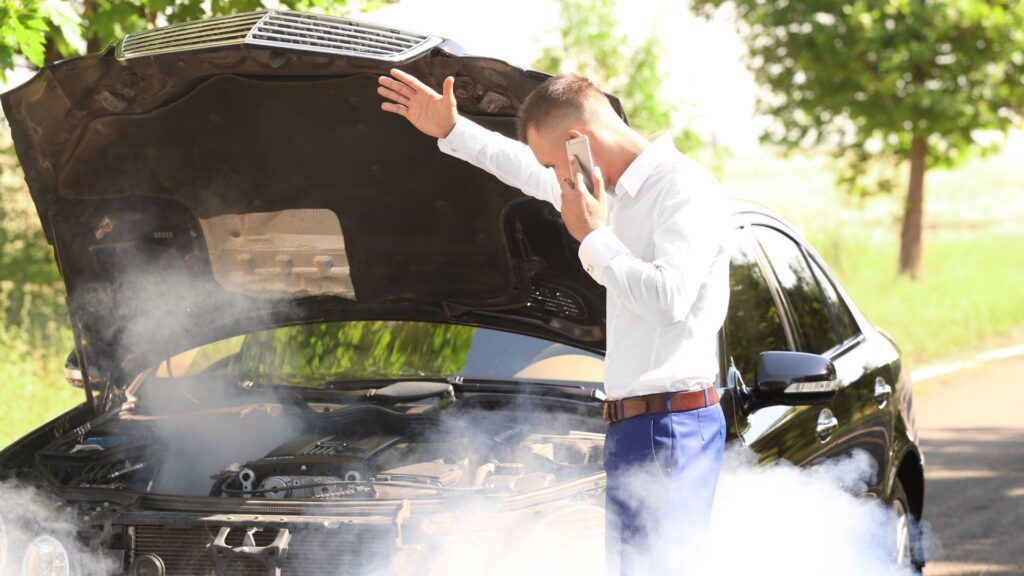
- Steam coming from beneath the hood
- A sweet coolant smell
- Visible coolant beneath the vehicle
- Reduced engine performance
- Unusual gurgling or boiling sounds
If you notice these warning signs, take action promptly rather than continuing to drive.
What to Do When Your Engine Is Overheating
If your vehicle begins overheating while you are driving, remain calm and focus on reaching a safe location.
- Pull over safely as soon as possible.
- Turn off the engine after you have stopped.
- Keep clear of steam coming from beneath the hood.
- Never remove the radiator cap or pressurized coolant cap while the engine is hot.
- Allow the vehicle to cool before checking the coolant reservoir.
- Arrange for professional assistance if the cause is unknown or the vehicle continues to overheat.
Do not continue driving an overheated vehicle. Continued operation can damage the head gasket, warp the cylinder head, or cause other costly engine damage.
How to Help Prevent Car Overheating
Preventive maintenance can help reduce the risk of engine overheating and unexpected breakdowns.
Check your coolant level according to your vehicle manufacturer’s recommendations, and use the correct coolant mixture for your vehicle. If the coolant level drops repeatedly, schedule an inspection rather than simply topping it off again.
It is also important to have the cooling system inspected for worn hoses, leaks, radiator concerns, water pump problems, thermostat failure, and cooling fan issues. Your vehicle’s recommended maintenance schedule can help determine when coolant replacement or cooling-system service is needed.
Keeping an eye on the temperature gauge, especially during hot weather or heavy traffic, can also help you recognize problems before the engine becomes severely overheated.
Schedule Cooling System Service in Covington, IN
Engine overheating is a serious concern, but many cooling-system problems can be addressed before they lead to major engine damage. Whether your vehicle has low coolant, a failing thermostat, radiator trouble, worn hoses, or water pump concerns, a professional inspection can help identify the cause.
At Newnum and Sons Garage in Covington, IN, our team can inspect your cooling system and recommend the appropriate service for your vehicle.
Call 765-793-3334 to schedule cooling-system service today.