OEM vs Aftermarket Car Parts: Only One Protects Your Warranty
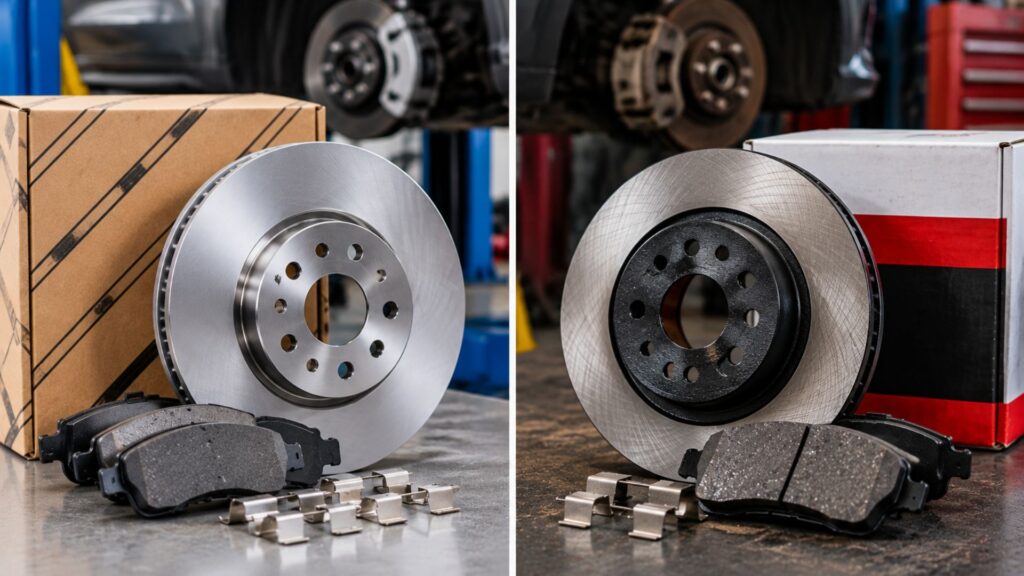
OEM vs Aftermarket Car Parts: Only One Protects Your Warranty When your car needs a repair, one of the first decisions you’ll face is whether to use OEM or aftermarket parts. Most people have no idea what those terms even mean, and that’s completely fair. But the choice you make here can have real consequences for your wallet, your warranty, and the long-term reliability of your vehicle. Let’s break this down in plain language so you can make a confident, informed decision. What Are OEM Car Parts? OEM stands for Original Equipment Manufacturer. These are the same parts that were used to build your car at the factory. They come from the same manufacturer that supplied your automaker, and they’re designed to fit and function exactly the way your vehicle was engineered to work. Think of OEM parts as the “factory original” version of whatever needs replacing. The fit is precise, the quality is consistent, and there’s no guessing involved. What Are Aftermarket Car Parts? Aftermarket parts are made by third-party companies – not the original manufacturer. Some of these companies make excellent products. Others… not so much. The aftermarket parts industry is massive, and quality varies wildly from brand to brand. That’s the key thing to understand. “Aftermarket” doesn’t automatically mean cheap or inferior, but it does mean less predictable. You need to know who made it, what standards they follow, and whether it’s the right fit for your specific vehicle. OEM vs Aftermarket Car Parts: The Core Differences Here’s where things get practical. When you’re comparing OEM vs aftermarket car parts, a few key factors should drive your decision. Fit and Compatibility OEM parts are made to exact specifications. They slide in, bolt up, and function exactly as the manufacturer intended. Aftermarket parts are designed to be compatible across a range of vehicles, which sometimes means slight variations in dimensions, materials, or finish. For most routine repairs, the difference is minimal. But for complex systems – like your transmission, brakes, or electrical systems – an imprecise fit can cause bigger problems down the road. Quality and Reliability OEM parts carry a guarantee of consistency. Every unit goes through the same quality control process before it leaves the factory. With aftermarket parts, quality control depends entirely on the manufacturer, and that can be a real gamble if you’re buying from an unfamiliar brand. That said, some aftermarket brands have strong reputations and rigorous testing processes. The issue is knowing which ones to trust, and that’s where working with an experienced technician makes all the difference. Cost Differences Aftermarket parts are usually less expensive than OEM, sometimes significantly so. For older vehicles or minor repairs, this can make aftermarket parts a smart financial choice. For newer vehicles still under warranty, or for safety-critical repairs, paying a bit more for OEM parts is often the better investment. Price shouldn’t be the only factor you consider. A cheap part that fails in six months costs more in the long run than a reliable OEM part that lasts the life of the vehicle. The Warranty Question – and It’s a Big One This is the part most drivers don’t fully understand until it’s too late. If your car is still under the manufacturer’s warranty, the parts used to repair it can absolutely affect your coverage. Does Using Aftermarket Parts Void Your Warranty? Here’s the short answer: it depends, and the nuance matters. Under the Magnuson-Moss Warranty Act, a federal law, manufacturers cannot void your warranty simply because you used aftermarket parts or chose an independent repair shop. However, they can deny a warranty claim if they can prove the aftermarket part caused or contributed to the failure in question. So let’s say you put in an aftermarket sensor to save a few dollars, and that sensor causes an electrical issue. Your warranty claim on that repair could be denied. If the sensor had nothing to do with a separate engine issue, your engine repair claim would likely still be covered. The risk is real, even if it’s not absolute. Using OEM parts removes that risk entirely. New Cars vs. Older Vehicles For a newer vehicle still under the manufacturer’s warranty, sticking with OEM parts is the safest approach. The stakes are higher because warranty repairs can cover thousands of dollars in potential costs. For older vehicles outside the warranty period, aftermarket parts become a much more reasonable option – especially when they come from a reputable brand and are installed by a qualified technician. Where Independent Repair Shops Fit In A lot of drivers assume they have to go back to the dealership to get OEM parts installed. That’s not true. Independent repair shops like Newnum and Sons Garage in Covington, IN can source and install OEM parts just as well as any dealership – often with faster turnaround, lower labor rates, and more personalized service. At Newnum and Sons Garage, every repair starts with a clear, upfront estimate so you know exactly what parts are being used and why. Their trained technicians know when OEM is the right call and when a quality aftermarket part makes more sense for your situation. When Aftermarket Parts Make Sense There are genuinely good reasons to choose aftermarket parts in the right circumstances. Here are a few situations where they can be a smart move: High-mileage vehicles where the cost of OEM parts outweighs the car’s value Out-of-warranty repairs where you’re focused on cost control Performance upgrades where aftermarket parts are specifically designed to outperform OEM Parts that are discontinued or no longer available from the original manufacturer In these cases, the key is choosing a reputable aftermarket brand and having it installed by someone who knows the difference. When OEM Parts Are Worth Every Penny There are also situations where OEM is the clear winner and shouldn’t be negotiated away for cost savings. Safety systems are non-negotiable. Your brake system, suspension components, and steering parts need to perform to exact specifications. For brake repairs
OEM vs Aftermarket Car Parts: Only One Protects Your Warranty Read More »