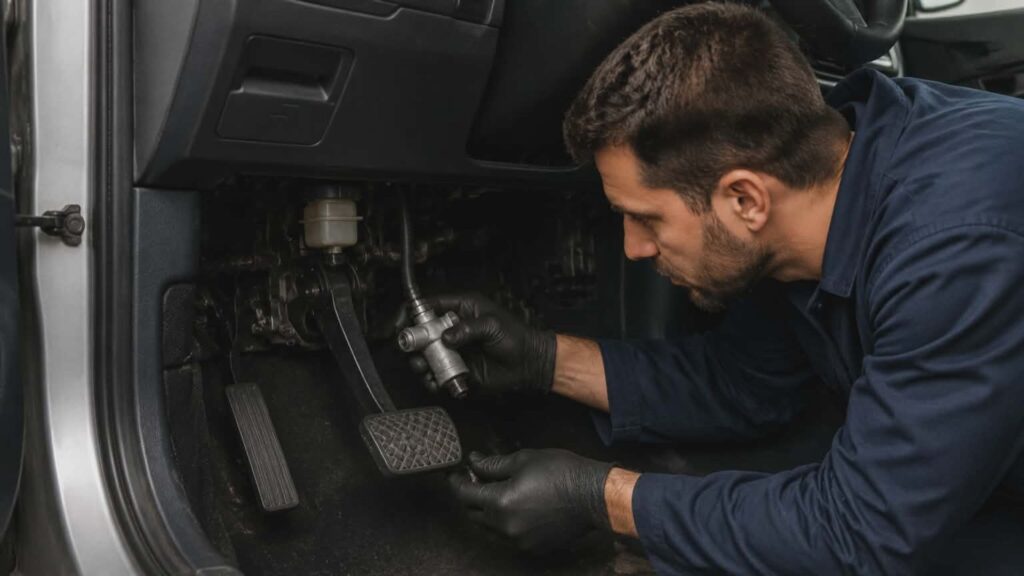
Spongy Brake Pedal? What It Means and How to Fix It Fast
There is nothing quite as unsettling as pressing your brake pedal and feeling it sink further than it should, or feeling that soft, mushy give instead of the firm resistance you expect. A spongy brake pedal is not just annoying – it is a warning sign that something in your brake system needs attention, and the sooner you act, the safer you will be.
This guide breaks down the causes of a soft or spongy brake pedal, how to diagnose the problem, and what you can do to fix it.
What Does a Spongy Brake Pedal Actually Feel Like?
Most drivers know what a healthy brake pedal feels like. You press it, it pushes back with firm resistance, and the car slows down predictably. A spongy brake pedal feels different – there is a soft, compressible quality to it, almost like pressing a sponge instead of a firm surface.
In some cases, the pedal may travel closer to the floor before engaging the brakes. In more serious situations, the soft brake pedal can progress to a low pedal that barely responds, or to a sinking pedal that goes nearly to the floor. These are all signs of spongy brakes that should not be ignored.
Signs of Spongy Brakes You Should Watch For
Beyond the obvious feel of the pedal, there are a few other signs of spongy brakes worth paying attention to.
- The pedal requires more pressure than usual to slow the vehicle
- Braking feels inconsistent or unpredictable
- A brake warning light appears on the dashboard
- You notice visible brake fluid under the car or near the wheels
- The pedal improves slightly after pumping it several times
If you notice any of these, it is time to diagnose the issue before it affects brake performance where it counts most.
Common Causes of a Spongy or Soft Brake Pedal
Understanding what causes a soft or spongy brake pedal is the first step to fixing it. There are several potential culprits, and some are more urgent than others.
Air in the Brake System
The most common cause of a soft brake pedal is air in the brake lines. Your brake system relies on hydraulic pressure to function – when you press the brake pedal, brake fluid transfers that force to the caliper, which then squeezes the brake pad against the rotor to slow the wheel.
Air is compressible in a way that brake fluid is not. When air gets into the brake lines, it absorbs some of that pressure instead of transmitting it, which causes the brake pedal to feel spongy or soft. Air in the brake system can get there through a fluid leak, during brake repairs, or when brake components are replaced without a proper bleeding procedure.
A Brake Fluid Leak
A fluid leak anywhere in the brake system can introduce air into the system and reduce hydraulic pressure. The leak might be coming from the master cylinder, a caliper, a brake hose, or the brake lines themselves. Fluid leaks around seals and connections are especially common in older vehicles, where wear and rust can cause components to degrade over time.
If there is a brake fluid leak, you may notice the brake fluid reservoir is low, or you may see a wet spot or puddle near a wheel. A visible brake fluid puddle or stain is a clear signal to get the brake system inspected right away.
A Failing Master Cylinder
The master cylinder is the heart of the hydraulic brake system. It converts the mechanical force of pressing the brake pedal into hydraulic pressure that activates the brakes at each wheel.
When the master cylinder starts to fail, it can allow fluid to bypass its internal seals, which causes the pedal to feel soft or drop under sustained pressure.
A bad master cylinder is a serious issue. It is one of the causes of a soft brake condition that genuinely puts you and others at risk on the road. If you suspect the master cylinder, have it inspected by a professional without delay.
Contaminated Brake Fluid
Contaminated brake fluid is a less obvious but important cause of brake problems. Brake fluid absorbs moisture over time, and when the fluid goes too long without being changed, that moisture lowers the fluid’s boiling point. Under heavy braking, old fluid from boiling can create vapor bubbles that behave like air in the system – reducing pressure and causing a spongy feel.
Contaminated brake fluid can also cause the system to gum or gel internally, which affects brake components and overall brake performance. Using the wrong type of brake fluid can make things worse. Most passenger vehicles use DOT 3 or DOT 4 fluid; DOT 5 (silicone) should never be mixed with other types because mixing can cause the system to gum or gel.
A Damaged or Swollen Brake Hose
A brake hose connects the rigid brake lines to the caliper at each wheel, and it is designed to handle significant pressure. If the brake hose becomes damaged, swollen, or deteriorated internally, it can act like a balloon – expanding slightly when the pedal is pressed rather than transmitting full pressure to the caliper.
This can feel similar to a fluid leak. Air entering from outside the hose is rare, but internal hose collapse can noticeably affect pedal feel. It is also possible for debris or rust to affect the ability of the fluid to properly enter and exit the hose.
Worn Brake Components
Sometimes, worn brake pads and rotors contribute to a soft or inconsistent pedal feel, especially if the brake pad has worn down significantly. In disc brake systems, a heavily worn pad means the caliper piston has to travel much further before making contact with the rotor. In some cases, new rotors or new brake pads are needed to restore proper function. In drum brake systems, worn rear brakes can affect the overall feel when the pedal is pressed.
Even the anti-lock brake system (ABS) components can introduce air into the system during certain types of repairs, which is why a proper bleed procedure matters after any major brake work.
How to Diagnose and Fix a Spongy Brake Pedal
To diagnose and fix a spongy brake pedal, start by checking the easy things first.
- Check the brake fluid level. Open the reservoir under the hood and see if the fluid is at the correct level. Low fluid often points to a leak somewhere in the system.
- Inspect for leaks. Look around each wheel, under the hood near the master cylinder, and along the brake lines for signs of wetness or fluid. A brake fluid leak that goes unaddressed will only get worse.
- Pump the pedal and observe. If the pedal feels spongy at first but firms up after pumping, that is a strong sign of air in the lines. Air gets into the brake system and stays trapped until it is bled out.
- Bleed the brakes. Bleeding the brakes removes trapped air from the system. You can bleed the brake system using a brake bleeder kit and a helper, or use a brake bleeder with a one-way valve at each bleeder screw. The goal is to push old fluid and air from the brake lines out through the bleeder screws, starting with the wheel furthest from the master cylinder. After the bleeding procedure is complete, check whether pedal feel has improved.
- Flush the brake fluid. If the fluid is old or contaminated, it is smart to flush the brake fluid entirely and replace it with fresh fluid of the correct type. Changing or flushing the brake fluid is part of routine preventative maintenance that many drivers overlook.
- Replace worn or damaged parts. If the master cylinder is leaking internally, or if a caliper, brake hose, or brake lines are damaged, those brake parts need to be replaced. New brake components restore proper hydraulic pressure and firm up the pedal.
If any of this feels beyond your comfort level or tools, that is completely fine. This is exactly what the suspension and brake repair services at Newnum and Sons Garage are here for. The technicians can quickly diagnose a spongy brake pedal and get you back on the road safely.
When to Get Professional Help
If you have checked the fluid, noticed a leak, or tried bleeding the brakes without success, it is time to bring the vehicle in. A spongy or soft brake pedal that does not resolve after basic checks could indicate a failing master cylinder or a more complex issue with brake components within the system.
Do not wait until braking becomes unreliable while driving. Braking issues have real consequences, and addressing them early is always cheaper and safer than dealing with the aftermath of a traffic collision or towing your vehicle after a brake failure.
Newnum and Sons Garage offers professional auto repair services that cover everything from a simple brake fluid top-off to full brake system overhauls.
Conclusion
A spongy brake pedal is your vehicle’s way of telling you something is wrong, and it deserves a fast response. Whether the cause is air in the lines, a fluid leak, a failing master cylinder, or old, contaminated fluid, the fix is straightforward when you catch it early.
Check your fluid, inspect for leaks, and bleed the system if needed. If the problem persists, call Newnum and Sons Garage at 765-793-3334 to schedule an inspection. Your brakes are too important to wait on.