Why Your Steering Wheel Clicks When Turning and What to Do About It
That click coming from your steering wheel when you turn can range from mildly annoying to genuinely alarming. Whether it’s a single click at low speed or a rhythmic clicking sound every time you turn the wheel, your car is trying to tell you something. The good news is that most of the common causes are diagnosable and fixable – you just need to know where to look.
What Does It Mean When Your Steering Wheel Clicks?
A clicking noise when turning is not something to ignore. It’s a sign that something in your steering or suspension system is worn, loose, or low on fluid. Left unaddressed, a small click can turn into a much bigger and more expensive problem.
The sound when turning can vary. Some drivers hear a clicking or popping noise. Others describe it as a clicking or knocking sound that gets louder during sharp turns. The location and timing of the noise matter a lot when diagnosing the issue.
Common Causes of a Clicking Noise When Turning
There is no single answer here. A clicking noise when turning the steering wheel can come from several different places on the vehicle. Here are the most likely culprits.
CV Joint Wear
The CV joint – short for constant velocity joint – is one of the most common causes of a clicking sound when turning. The CV joint connects the axle to the front wheel and allows power to transfer smoothly while the suspension moves up and down.
When a failing CV joint loses its grease due to a torn boot or just normal wear, it starts to make a clicking or popping noise, especially during turns. You will often hear a clicking sound when you turn the wheel sharply at low speed, like when pulling into a parking spot. If you hear a clicking or popping that gets worse as you turn harder, a failing CV joint is usually the first thing to inspect.
Replacing a CV joint or the axle shaft is a straightforward job for a professional technician, and catching it early prevents damage to other suspension components.
Steering Column Issues
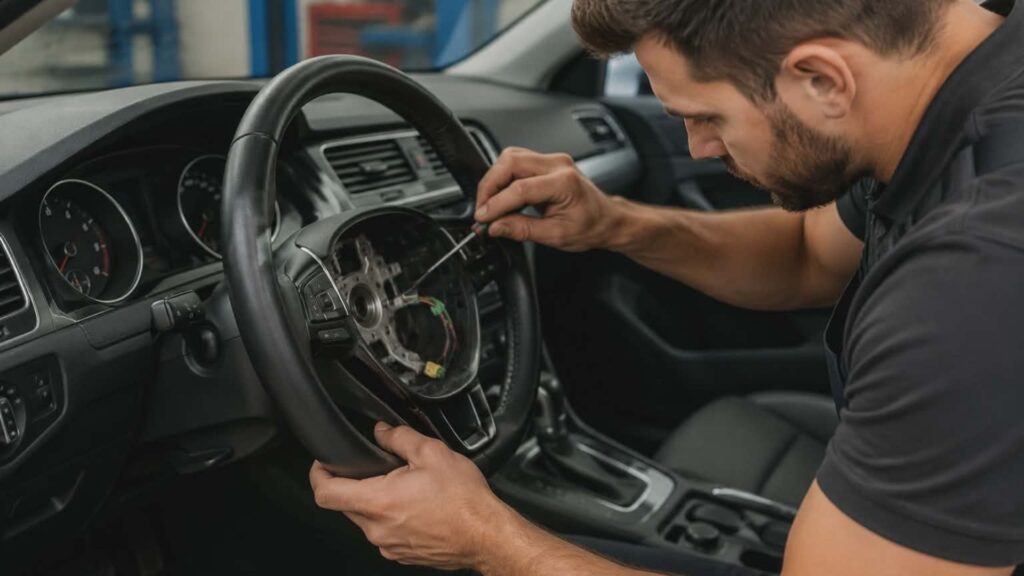
The steering column is the mechanical link between your steering wheel and the rest of the steering system. Inside the column, there are bearings, joints, and in some vehicles, a steering shaft that can wear over time.
Column bearings can produce clicking noises when they dry out or become damaged. You might hear a clicking sound when turning your steering wheel from left to right at low speed, almost like something is catching inside the column. Steering column issues can also affect the steering wheel controls if the problem is near the end of the steering column where the clockspring sits – a component connected to airbag and audio controls.
If something in your steering feels stiff or you hear a noise when you turn that seems to come from behind the dashboard, the steering column deserves a close look.
Low or Dirty Power Steering Fluid
If your vehicle uses hydraulic power steering, low power steering fluid or dirty power steering fluid can cause noises when turning the steering wheel. The power steering pump relies on clean hydraulic fluid to keep the steering rack and steering gear operating smoothly.
Low or contaminated fluid creates air pockets inside the system, which can cause clicking, whining, or groaning sounds when you turn the steering wheel, especially at lower speeds. Stiff steering is another warning sign that something is off with the power steering system.
Checking the fluid level is easy, but if the fluid looks dark or gritty, a flush and refill is the better move. Low fluid can also point to a leak somewhere in the system, which should be found and repaired before it damages the steering pump, rack, or other steering gear components.
Worn Suspension Components
Your suspension system does more than just smooth out bumps. It keeps your tires in contact with the road and directly affects steering control. When suspension components like ball joints, struts, or tie rods wear out, they can cause clicking, clunking, or a popping noise when turning.
A bad ball joint or worn tie rod can make a clicking noise when you turn the wheel, particularly during slow maneuvers. You might also notice uneven tire wear or a pull to one side – both signs that the suspension system needs attention. These parts bear a lot of stress, especially on rougher roads, and they do not last forever.
Ignoring worn suspension components can affect steering and brake performance, which puts both the vehicle and driver at risk. If you suspect this is the issue, it is worth having the full steering and suspension checked together.
Wheel Bearing Problems
A bad wheel bearing can cause a clicking or knocking noise that changes with speed and steering input. Unlike a CV joint, which tends to be loud during sharp turns at low speed, a failing wheel bearing often produces a humming or grinding sound that gets worse when you turn the wheel in one direction – such as turning left – at highway speeds.
Wheel bearings are a safety component. When they fail, the front wheel can become unstable, which directly affects brake performance and automobile handling. If you hear a clicking sound when you turn, along with a rumble or vibration, have the wheel bearing checked immediately.
For more on what causes unusual vibrations and noise from your vehicle, read our article on the causes of a car shaking at high speeds.
How to Tell Which Problem You Have
Not every click sounds the same, and the situation in which it happens gives you a lot of clues.
- Clicking at low speed during sharp turns – likely a failing CV joint
- Clicking or popping noise when turning at any speed with a stiff steering wheel – points to low or dirty power steering fluid
- Noise when turning that seems to come from behind the dash – possible steering column issues
- Clicking or knocking sound with uneven tire wear – worn suspension components or tie rod
- Sound when you turn at highway speeds with vibration – bad wheel bearing
These patterns are not always definitive. That’s why having a trained technician inspect the vehicle using advanced computer diagnostics is the most reliable way to get a real answer.
Why You Should Not Wait to Get It Checked
A clicking sound might seem harmless at first. But noises when turning the steering wheel are almost always a sign that something is wearing, breaking, or running low. Disc brake performance, steering control, and overall automobile handling are all tied to a healthy steering system and suspension system.
If your steering wheel makes a clicking noise, the vehicle is telling you it needs attention.
Catching the problem early usually means less damage and lower repair costs.
At Newnum and Sons Garage, our technicians can diagnose clicking, popping, and grinding noises quickly and accurately. Whether it’s a CV joint, steering shaft, or wheel bearing, we offer complete auto repair services with upfront estimates and no surprises. We also handle driveline repair and maintenance, and full suspension and brake repair services for drivers in and around Covington, IN.
Conclusion
A clicking noise from your steering wheel when turning is not just an annoyance – it’s a warning. Whether the cause is a failing CV joint, worn suspension components, a steering column issue, or low power steering fluid, each problem gets worse over time. The safest move is to have it inspected by a professional before a small click turns into a serious repair. Call Newnum and Sons Garage at 765-793-3334 or visit newnumsgarage.com to schedule your inspection today.