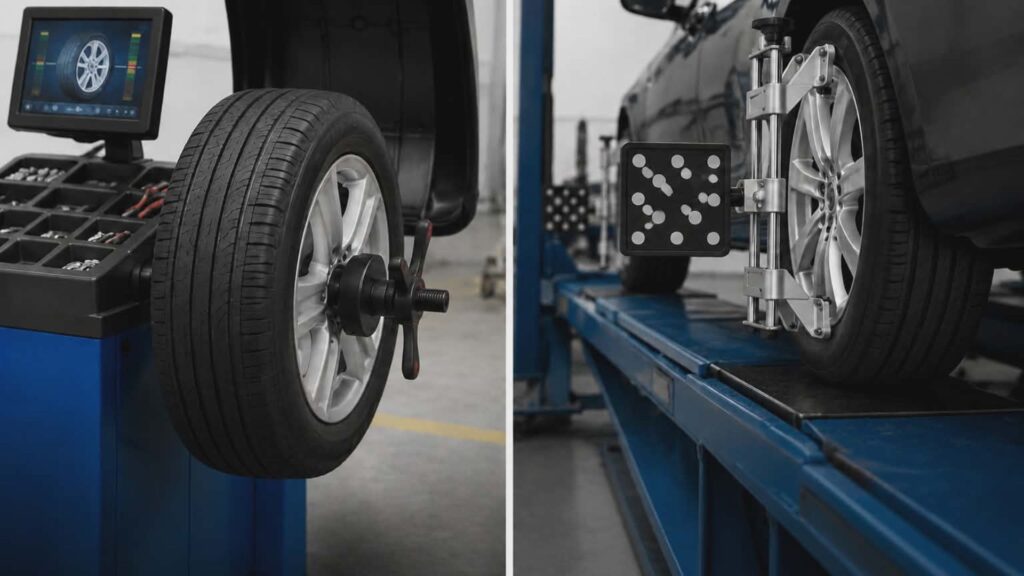
Tire Balancing vs Alignment: What Your Car Really Needs
Your tires are doing a lot of work. Every mile you drive puts wear and tear on them, and over time, small imbalances or alignment issues can turn into big problems. But here is where a lot of drivers get confused: tire balancing and wheel alignment are not the same thing. Knowing the difference between tire balance and alignment could save you money, protect your tires, and make your ride a whole lot smoother.
Let us break it all down in plain language.
What Is Tire Balancing and Why Does It Matter?
Tire balancing corrects the uneven distribution of weight around your tire and wheel assembly. When a tire is mounted onto a rim, the weight is rarely perfectly even all the way around. Even small variations can cause your car to vibrate at higher speeds.
Here is how it works: a technician mounts your wheel and tire assembly onto a tire balancing machine. The machine spins the tire and wheel together to detect where the weight is off. Then small weights are added to the rim to even things out.
Signs Your Tires May Need Balancing
One of the clearest signs of an unbalanced tire is vibration. You might feel vibrations in your steering wheel, through your seat, or even in the floorboards. This tends to get worse the faster you drive. That’s why we wrote about why cars shake at high speeds – it’s a problem worth understanding.
Other signs include:
- Uneven tire wear on specific spots of the tread
- A steering wheel that shakes at highway speeds
- Reduced fuel efficiency due to extra rolling resistance
Regular tire balancing helps prevent these issues before they become costly. The benefits of tire balancing go beyond comfort – they include longer tire life and better fuel economy. Prolonging tire life means getting more value out of every tire you buy.
How Often Should You Balance Your Tires?
Most mechanics recommend balancing your tires every 5,000 to 6,000 miles, or whenever you notice something feels off. It is also smart to schedule balancing with every tire rotation. If you have had a flat tire repaired or replaced a tire recently, that new tire will need balancing too – even brand-new tires are not always perfectly balanced from the factory.
What Is Wheel Alignment and How Is It Different?
While tire balancing deals with weight distribution around the tire, wheel alignment refers to the angles at which your tires make contact with the road. Proper wheel alignment ensures your tires are all pointing in the correct direction relative to each other and to your vehicle’s frame.
Alignment involves adjusting the car suspension – specifically the angles of the wheels – so that your vehicle drives straight and handles predictably. A four-wheel alignment checks and adjusts all four wheels, while a front-end alignment only addresses the front axle.
The Difference Between Wheel Alignment and Tire Balance
The key difference between tire balance and wheel alignment comes down to this: balancing fixes vibration caused by uneven weight, while alignment fixes the direction your tires point.
They address different problems, but both directly affect how your car drives and how long your tires last.
Improper wheel alignment causes your tires to drag slightly instead of rolling cleanly. This leads to premature tire wear, reduced fuel efficiency, and handling problems. Alignment affects everything from your steering response to how evenly your tire tread wears down over time.
Signs You Need a Wheel Alignment
Alignment problems often sneak up on you gradually. Common signs that it is time for a wheel alignment include:
- Your car pulls to one side even when you are driving on a flat, straight road
- A crooked steering wheel when you are driving straight
- You notice uneven tire wear across the tread
- The steering wheel is off-center or feels loose
Hitting a pothole, bumping a curb, or any kind of road impact can knock your wheels out of alignment. If you have had any suspension work done recently, getting your alignment checked is a smart follow-up step. Learn more about how your vehicle’s suspension and brake system services connect to overall tire health and handling.
What Proper Alignment Does for Your Car
Wheel alignment ensures your tires work together as a team. Proper alignment ensures even tire tread wear, which means you get the most out of each tire before needing to replace it.
Alignment keeps your vehicle tracking straight, reduces driver fatigue, and supports better fuel efficiency since aligned tires roll more efficiently.
Alignment helps prevent the kind of premature tire tread wear that forces you into early replacements. It also reduces stress on your steering components and car suspension, which can prevent more expensive repairs down the line.
Tire Balancing or Alignment: Which One Do You Need?
This is the most common question, and honestly, the answer depends on your symptoms. A vibrating steering wheel usually points to a tire balance issue. A car that pulls to one side or a steering wheel that feels off-center usually signals alignment issues.
Sometimes you need both. Alignment and tire balancing together make up a solid foundation for tire maintenance. If you are not sure, a professional inspection will sort it out quickly. Checking out the most common car repairs drivers face can give you a broader picture of what routine maintenance actually looks like.
Expert tire balancing and wheel alignment services are part of a smart, ongoing preventative vehicle maintenance schedule. Staying on top of both is one of the best ways to protect your investment in your tires and your vehicle overall.
Schedule Your Tire Balancing and Alignment in Covington, IN
At Newnum and Sons Garage in Covington, Indiana, we offer tire balancing and alignment as part of our complete auto repair services. Whether your steering wheel shakes at highway speeds or your car drifts to one side, our technicians will diagnose the problem and fix it right.
Call us at 765-793-3334 or visit newnumsgarage.com to book an appointment.
Conclusion
Understanding tire balancing vs alignment helps you make smarter decisions about your vehicle’s care. Tire balance addresses vibration and weight distribution. Wheel alignment corrects the angles at which your tires contact the road. Both protect your tires, improve fuel efficiency, and keep your drive smooth and safe.
If you are noticing any warning signs, do not wait until the problem gets worse. Reach out to Newnum and Sons Garage in Covington, IN, and let our team help you figure out exactly what your car needs.