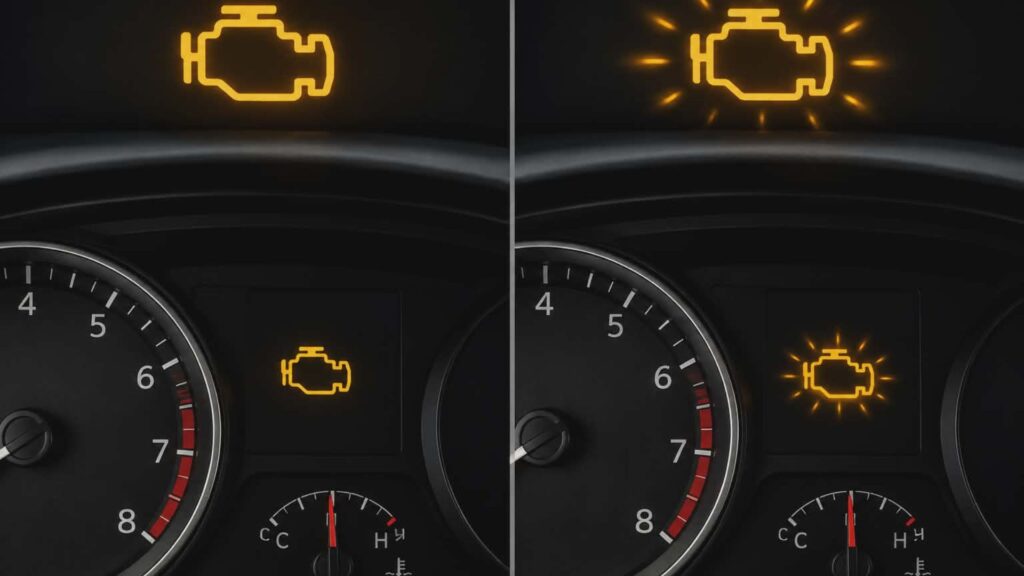
Solid Check Engine Light vs Flashing: What Each Signal Really Means for Your Car
That little amber glow on your dashboard can trigger a wave of panic – or, for some drivers, a shrug and a “I’ll deal with it later.” But here is the truth: not all check engine lights are created equal. The difference between a flashing and a solid signal matters more than most people think
Let us break it all down in plain language so you know exactly what your car is trying to tell you.
What Is the Check Engine Light, Anyway?
The check engine light is part of your car’s onboard diagnostics system, also known as OBD-II.
When something goes wrong with your engine, exhaust system, sensors, or other key components, the car’s diagnostic system detects it and stores diagnostic trouble codes. The light on the dashboard is simply the vehicle’s way of saying, “Hey, something needs attention.”
The challenge is that one symbol covers a huge range of problems – from something as minor as a loose gas cap to something as serious as engine damage. That is why the way the light behaves matters so much.
Understanding the Difference: Solid vs Flashing
Understanding check engine light behavior starts with one key difference: is the light steady, or is it blinking?
What a Solid Check Engine Light Means
A steady check engine light illuminates when the car’s computer has detected an issue that needs attention, but is not necessarily causing immediate harm to your vehicle right now. The solid check engine light indicates a problem worth investigating, but it is generally not a “pull over immediately” situation.
A solid light might be triggered by things like:
- A loose gas cap allows fuel vapors to escape
- A faulty oxygen sensor affects the air-fuel ratio
- A failing mass flow sensor is causing poor fuel economy
- Issues with the exhaust gas recirculation valve
- Minor engine sensor failures
- Spark plug or ignition coil wear
A steady check engine light is still a warning light. Ignoring it for weeks or months can allow a minor engine issue to grow into something far more serious and costly.
What a Flashing Check Engine Light Means
A flashing check engine light is a different story entirely. When the light is blinking, your car is not just asking for attention – it is demanding immediate action. A blinking check engine light typically signals an active engine misfire, meaning one or more cylinders are not firing correctly during the combustion cycle.
Here is why that is so urgent: when a misfire happens, raw fuel and unburned fuel pass through the combustion chamber and enter the exhaust system. This raw fuel can quickly overheat and damage the catalytic converter – one of the most expensive components in your vehicle’s emissions control system. Replacing a catalytic converter is rarely cheap, and continuing to drive with a flashing check engine light dramatically increases the risk of turning a manageable repair into a catastrophic engine problem.
If you see a check engine light flashing, the right move is to stop driving as soon as it is safe to do so and call a mechanic.
Common Causes Behind Check Engine Light Issues
Both types of check engine lights can be triggered by a wide range of issues. Here is a closer look at what commonly triggers the check engine light in each scenario.
Common Causes of a Steady Check Engine Light
The steady check engine light appears most often when a sensor or non-critical system sends a fault signal to the car’s computer. An oxygen sensor that is reading the exhaust gas incorrectly is one of the most common causes. Other triggers include problems with the ignition system, a failing spark plug, a cracked or worn gasket, or even a loose gas cap that allows pressure to escape from the fuel system.
Issues with the transmission, throttle position, variable valve timing, or even a failing vehicle battery can also trigger a solid check engine light. The car is still drivable in most cases, but you should schedule a diagnostic check soon.
Common Causes of a Flashing Check Engine Light
A flashing CEL almost always points to an engine misfire. The misfire might be caused by a worn spark plug that is no longer creating a clean ignition, a bad ignition coil that is not delivering enough energy to the combustion chamber, or a fuel injection problem that is disrupting the proper air-fuel ratio.
In some cases, a flashing check engine light can also signal issues with engine compression, a timing belt problem, or head gasket failure. These are all situations where fuel entering the exhaust can cause serious and rapid damage. A mechanic needs to look at this immediately.
Solid and Flashing Check Engine Light: How to Respond
Understanding check engine light behavior is only useful if you know what to do next.
- If the light is solid:
Schedule an appointment with a mechanic as soon as you reasonably can. You do not need to abandon your car on the side of the road, but you should not keep ignoring it either. The longer you wait, the higher the risk of an expensive repair. A good rule of thumb is to get it checked within a few days.
- If the light is flashing:
Treat this as an emergency. Reduce your speed, avoid heavy acceleration, and stop driving when safe. The difference between a flashing and a solid light can literally be the difference between a $300 fix and a $2,000 repair.
In both cases, getting proper diagnostics done is the only way to know for sure what you are dealing with. Modern vehicles store specific codes that help technicians pinpoint the exact problem. At Newnum and Sons Garage, the team uses advanced computer diagnostics services to read these codes accurately and explain the findings in plain language before any work begins.
Why You Should Never Ignore Check Engine Lights
Some drivers see a check engine light and assume they can wait it out. But ignoring check engine lights has real consequences.
An illuminated check engine light left unaddressed can lead to compounding engine problems.
For example, a sensor failure might cause the engine to run rich, which means too much fuel enters the combustion chamber. Over time, that extra fuel can wash oil off the cylinder walls, cause engine knocking, reduce compression, and accelerate wear on pistons and valves.
A check engine light repair that might cost a couple of hundred dollars today can turn into something far more involved if you let it go. If you are curious about the most frequent reasons these lights appear, this overview of the reasons your check engine light comes on and off is worth reading.
Getting Diagnosed the Right Way
When a check engine light appears, the goal is to get an accurate diagnostic reading as quickly as possible. The OBD-II system stores specific fault codes that tell a trained technician exactly which system triggered the alert. Without a proper diagnostic scan, you are guessing.
Beyond diagnostics, if your vehicle has not had recent maintenance, it is worth reviewing the common signs your car needs a tune-up. Worn spark plugs, a dirty air filter, or a faulty ignition coil can all trigger check engine light issues and hurt your fuel economy at the same time.
For deeper engine concerns, Newnum and Sons Garage also offers professional engine repair services to address anything from minor sensor replacements to more complex internal repairs.
And if you want a broader picture of what vehicles commonly need, check out the guide on most common car repairs and maintenance needs – it is a helpful reference for any car owner.
Frequently Asked Questions
Is it safe to drive with a solid check engine light?
In most cases, yes – for a short time. A steady check engine light usually means there is a non-emergency issue. However, you should still have it checked promptly. If the light comes on alongside other warning signs like overheating, engine damage noises, or brake issues, stop driving immediately.
How long can I drive with a flashing check engine light?
You should not. The moment you notice the light is flashing, reduce speed and work your way to a safe stop. A flashing CEL signals active engine misfire, and continuing to drive risks damage to the catalytic converter and other components of the exhaust system.
Can I diagnose the problem myself?
You can buy a basic OBD-II scanner to read trouble codes at home. However, reading code is just the first step. Proper diagnostics involves understanding what those codes mean in context and knowing which auto repair solution is appropriate. A trained mechanic brings experience and tools that go well beyond a code reader.
Conclusion
Whether the light is solid or flashing, your car is telling you something important. A steady check engine light calls for prompt attention, while a flashing check engine light calls for immediate action. Either way, ignoring it is never the right move. At Newnum and Sons Garage in Covington, IN, the team is ready to help you get to the bottom of any check engine light concern – quickly, honestly, and without unnecessary upselling. Call 765-793-3334 to schedule your visit today.