Ignore the Battery: These Are Signs of a Bad Alternator
Most drivers immediately blame the battery when your car starts acting up. And honestly, that makes sense. The battery is the most familiar piece of the puzzle. But here is the thing – the battery is often just the messenger. The real culprit hiding behind those electrical gremlins might be your alternator.
If you have been noticing strange behavior from your vehicle and the battery keeps checking out fine, it is time to look a little deeper. Understanding the signs of a bad alternator could save you from a dead car, an unexpected breakdown, or a costly misdiagnosis.
What Does the Alternator Actually Do?
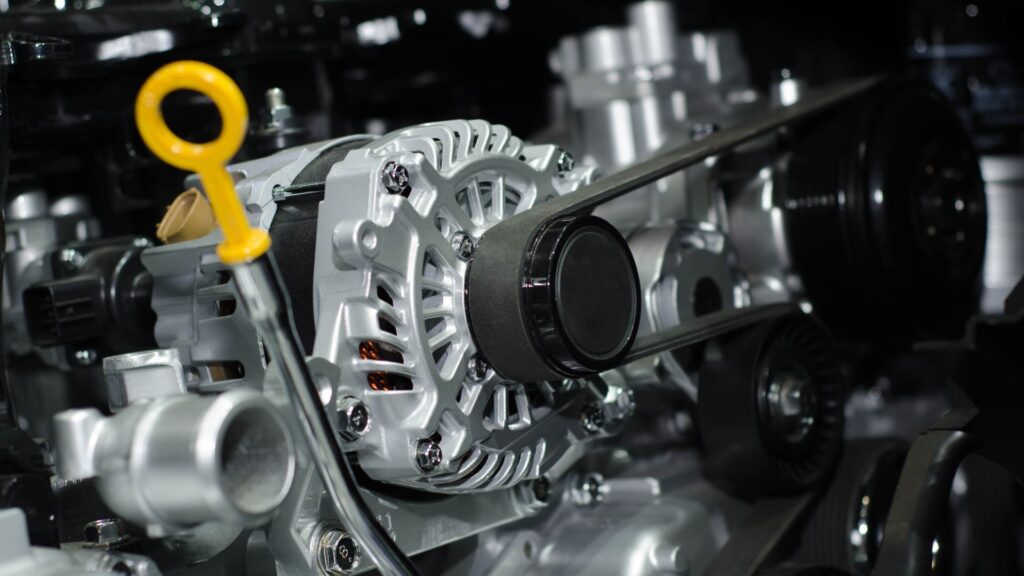
The alternator is a generator built into your engine. While your car is running, it converts mechanical energy into alternating current, which is then converted into direct current by an internal component called the rectifier. That electricity powers your vehicle’s electronics, charges the automotive battery, and keeps everything from your headlamps to your ignition system running properly.
Think of it this way – your electric battery gets the car started, but your alternator keeps it alive while you drive. When the alternator fails, the battery drains fast, and things start going wrong one by one.
Common Signs of a Bad Alternator
Your Dashboard Warning Light Comes On
Most modern vehicles have a battery-shaped dashboard warning light on the dashboard, but do not let the icon fool you. That light is often tied to the entire charging system, not just the automotive battery. When the alternator is underperforming and voltage drops outside the normal range, that light is usually the first sign and symptom your car gives you.
Some vehicles display it as “ALT” or “GEN,” but the message is the same – your charging system needs attention.
Your Headlights Are Flickering or Dim
Your headlamps are one of the biggest draws on your vehicle’s electrical load. When the alternator is struggling to maintain consistent voltage, the headlights are often the first thing to show it. You might notice them flickering, dimming at idle, or brightening when you rev the engine.
This is a classic sign of a bad alternator and should not be ignored, especially while driving at night.
Electronics Are Acting Strange
Modern cars run on a surprisingly complex computer network. From your power windows to your radio to your climate control, almost everything depends on stable electricity flowing from the alternator.
When that flow becomes inconsistent, your electronics may behave erratically. Windows might slow down, the radio might cut in and out, or your dashboard gauges might act confused. If multiple electrical systems are misbehaving at once, that points strongly toward an alternator issue rather than isolated component failures.
You Keep Needing a Jump Start
If you have had to jump start your car more than once recently, and your battery tests fine, that is a red flag. A healthy alternator keeps the battery charged while the engine runs. If the alternator is not doing its job, the battery drains down overnight or even between short trips.
Unlike a quick fix at a place like Jiffy Lube, alternator problems do not go away on their own. Repeated jump starts are a band-aid over a deeper issue.
You Hear Strange Noises
A failing alternator often makes noise before it completely dies. The most common sound is a grinding or whining coming from under the hood. This usually means a bearing inside the alternator is worn out.
Bearings in the alternator keep its internal parts spinning smoothly. When they wear down, that sound becomes hard to ignore. If you hear an unfamiliar grinding, rattling, or high-pitched whine near the engine, have it checked before the alternator seizes entirely.
You Smell Something Burning
A burning odor coming from your engine bay is never a good sign. When an alternator is overworked or the internal wiring begins to fail, it can produce a smell similar to burning rubber or hot natural rubber insulation.
This happens because the alternator’s wiring and components overheat under the strain of a failing rectifier or worn-out internal parts. If you catch a burning smell and cannot trace it to something obvious, the alternator should be on your short list of suspects.
Your Car Stalls or Is Hard to Start
Your ignition system depends on consistent power to fire the spark plugs and keep the engine running. When the alternator is failing and voltage drops too low, your engine may struggle to start, idle rough, or stall unexpectedly.
This is often one of the later signs of a bad alternator, typically appearing after the other symptoms have already been present for a while.
How Is a Bad Alternator Diagnosed?
A proper diagnosis involves testing the output voltage while the engine is running, inspecting the wiring and connections for corrosion, and checking the condition of the belt that drives the alternator. A technician will also rule out a weak automotive battery before concluding the alternator is the source of the problem.
This kind of accurate, no-guesswork diagnosis is what the team at Newnum and Sons Garage provides. Before any work begins, you will receive a clear explanation of the problem and an upfront estimate.
Don’t Ignore the Signs of a Bad Alternator
Electrical problems can feel overwhelming, but catching a bad alternator early makes the repair far simpler and less expensive. If your car is showing any of these signs – flickering headlights, strange noises, warning lights, or repeated dead batteries – do not wait it out.
Reach out to the team at Newnum and Sons Garage by calling 765-793-3334 to schedule a diagnostic. Our electrical service covers this kind of issue, and we will help get your vehicle running reliably again.