How to Protect Your Car's Undercarriage From Rust
If you live in Covington, IN, you already know that Indiana winters are no joke. Between road salt, freeze-thaw cycles, and standing water after a rainstorm, your car’s undercarriage takes a beating that most people never even think about – until it’s too late.
Rust doesn’t announce itself. It works quietly, eating through metal month after month, until what started as a small surface issue turns into something that affects your exhaust system, suspension, or brake lines. The good news is that protecting your car’s undercarriage isn’t complicated. You just need to know what you’re dealing with and take the right steps before the damage gets serious.
What Is the Car Undercarriage and Why Does It Matter?
The undercarriage is everything on the bottom of your vehicle – the frame, floor pans, exhaust pipes, fuel lines, brake lines, suspension components, and more. It’s the part of your car that takes the most direct exposure to the road, which means it’s constantly getting hit with moisture, salt, gravel, and debris.
Most people wash their car regularly but forget that the underside needs attention too. And because it’s out of sight, rust can develop for months without anyone noticing. By the time you spot it, the corrosion may already be affecting parts that are expensive and critical to your vehicle’s safety.
How Rust Forms on Your Undercarriage
Rust is the result of iron reacting with oxygen and moisture. Car frames and body panels contain iron, which makes them vulnerable. When road salt gets into the mix – as it does every winter in Indiana – it speeds up the chemical reaction dramatically.
Here’s what makes the undercarriage particularly vulnerable:
- Road salt used for ice and snow control sticks to metal surfaces and accelerates corrosion.
- Standing water collects in crevices and seams under the car where it can’t evaporate quickly.
- Gravel and debris chip away at protective coatings, exposing bare metal to the elements.
- Humidity and rain keep metal surfaces damp long after a storm has passed.
The areas most likely to rust first are the wheel wells, rocker panels, frame rails, and any part of the undercarriage near the exhaust system, which runs hot and then cools repeatedly, creating condensation.
How to Protect Your Car Undercarriage From Rust
Wash the Undercarriage Regularly
This is the single most effective thing you can do, especially during and after winter. Most drive-through car washes offer an undercarriage rinse, and it’s worth paying for it every time you go. The goal is to flush out road salt before it has time to sit and do damage.
After a snowstorm or on a day when roads were heavily salted, try to rinse your car within a day or two. Letting salt sit on metal surfaces for weeks at a time is what leads to serious rust problems down the road.
Apply an Undercoating or Rust-Proofing Treatment
Undercoating is a protective layer – usually a rubberized or oil-based spray – that gets applied directly to the undercarriage. It creates a barrier between the metal and the elements. This is one of the most reliable methods for long-term protection.
There are a few different types worth knowing:
- Rubberized undercoating forms a thick, durable shell and is good at deadening road noise as well.
- Oil-based coatings are thinner and can seep into crevices and seams, offering protection in hard-to-reach areas.
- Heat-resistant coatings are often used near the exhaust system where temperatures run higher.
A professional application ensures full coverage and proper surface preparation, which matters a lot for how long the coating holds up.
Inspect the Undercarriage Frequently
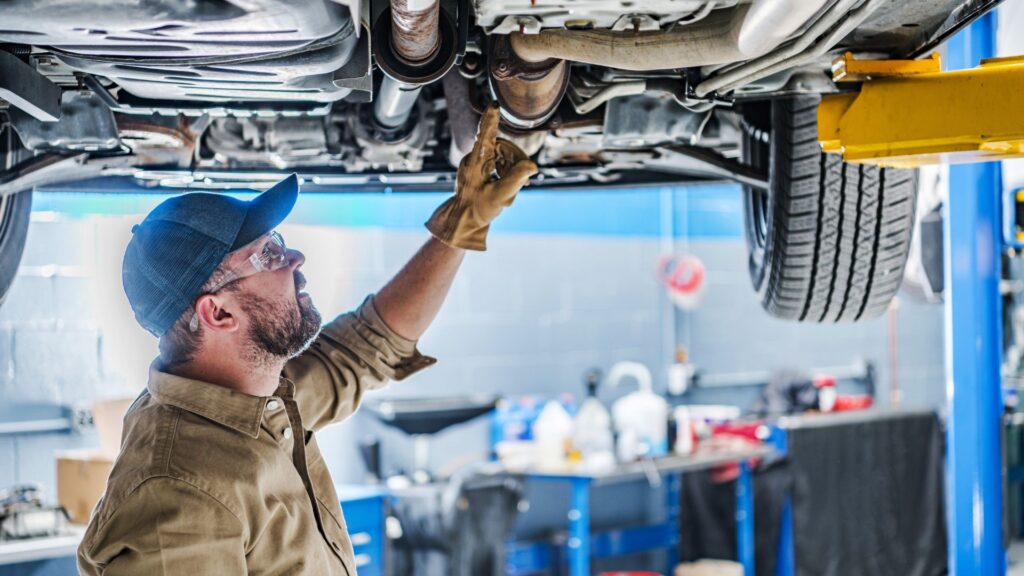
You don’t have to be a mechanic to do a basic visual check. When your car is on a lift during an oil change or brake inspection, ask the technician to take a look at the undercarriage. They can spot early signs of surface rust, chips in the protective coating, or areas where moisture has been pooling.
Catching rust early makes a huge difference. A small patch of surface rust can be treated and sealed before it spreads. Once rust eats through to structural metal or critical components like brake lines, the repair cost climbs significantly.
Keep Drain Holes Clear
Your car’s body has small drain holes designed to let water escape rather than pool inside panels and floor areas. These holes can get clogged with dirt, leaves, or road debris over time. When they’re blocked, water sits and accelerates rust from the inside out.
During a routine maintenance visit, a technician can check these drain holes and clear them if needed. It’s a small thing that makes a real difference.
Address Paint Chips and Scratches Quickly
When the paint or protective coating on your undercarriage gets chipped, bare metal is exposed. Even a small chip gives moisture and salt a direct entry point. Touching up chips with rust-inhibiting primer or paint as soon as you notice them keeps the problem from growing.
This applies to the visible body panels too. A small scratch on a rocker panel or wheel well might not seem urgent, but it can be the starting point for a much bigger rust problem if left untreated.
Consider Ceramic Coating for Extra Protection
Ceramic coatings aren’t just for paint. Some newer formulations can be applied to metal surfaces on the undercarriage and create a very hard, hydrophobic layer that repels water and prevents oxidation. While this option tends to cost more than traditional undercoating, it lasts longer and requires less frequent reapplication.
Talk to a qualified technician about whether ceramic coating makes sense for your vehicle and how it’s driven. For someone who logs a lot of highway miles or frequently drives on salted roads, the investment can pay off over time.
Warning Signs That Rust Is Already a Problem
If you haven’t been protecting your undercarriage and you’re not sure of its current condition, there are a few things to watch for.
- Flaking or bubbling paint on the lower panels of your car often signals rust developing underneath the surface. When rust pushes outward, it lifts paint from below.
- A musty smell inside the car can sometimes indicate rust damage or holes in the floor pan, allowing moisture and odors to enter the cabin.
- Unusual noises from underneath the car, especially rattling or clunking during acceleration or over bumps, might suggest that rust has weakened a suspension or exhaust component to the point where it’s moving or vibrating when it shouldn’t be.
- Visible orange or brown discoloration under the vehicle is the most obvious sign. Even if it looks like just surface rust right now, it should be evaluated by a professional to determine how deep it goes.
How Rust Affects Specific Vehicle Systems
Exhaust System
The exhaust system runs the entire length of the car and is constantly exposed to heat, moisture, and road spray. Rust can cause exhaust pipes to develop holes, allowing carbon monoxide and exhaust fumes to leak into or around the vehicle. A corroded muffler or cracked pipe also affects engine performance and fuel efficiency.
Keeping the exhaust system free of serious rust is genuinely a safety issue, not just a mechanical one.
Suspension Components
Suspension parts like control arms, struts, and subframes are made of steel and are located directly in the path of road spray. When rust weakens these components, it affects how your car handles – particularly during hard braking or when navigating corners. This is one of the reasons routine suspension checks are so important for vehicles with high mileage or a few winters behind them.
Brake Lines
Brake lines run under the car and carry hydraulic fluid that makes your brakes work. Rust can corrode the outside of these lines until they develop small leaks or, in serious cases, fail entirely. A brake line failure is one of the most dangerous mechanical issues a vehicle can experience, and it’s almost entirely preventable with regular inspections.
Frame and Floor Pan
The frame is your car’s skeleton. If rust gets deep into the frame rails or floor pans, it can compromise the structural integrity of the vehicle – not just in everyday driving, but especially in a collision. Structural rust is often expensive to repair and in some cases renders a vehicle unsafe to drive.
What to Expect When You Bring Your Car In for a Rust Inspection
When you bring your vehicle in for an undercarriage inspection, a technician will typically put it up on a lift and do a thorough visual assessment of all the components mentioned above. They’ll look for surface rust, deep pitting, any areas where protective coatings have worn away, and signs of structural damage.
From there, they’ll give you a clear picture of what they found and what – if anything – needs to be done. At Newnum and Sons Garage in Covington, IN, every estimate is explained upfront so you know exactly what you’re dealing with before any work begins. There are no surprises and no pressure.
Whether the car needs an undercoating application, exhaust repair, suspension work, or just a closer eye kept on a developing rust spot, you’ll leave knowing the full story about your vehicle.
FAQs About Protecting Your Car Undercarriage From Rust
How often should I wash my car’s undercarriage?
During winter months in Indiana, aim to rinse the undercarriage at least every two weeks – or after any significant snowstorm where road salt was used. In warmer months, once a month is generally sufficient depending on driving conditions.
Is undercoating worth it for an older car?
It depends on the current condition of the undercarriage. If there’s already significant rust present, a technician needs to treat or remove that rust first before applying any coating. Applying undercoating over active rust can actually trap moisture and make things worse. For a car in decent shape, undercoating is absolutely a worthwhile investment.
Can I apply rust protection myself?
There are DIY products available, but professional application is generally more thorough and longer-lasting. A lift gives technicians access to every corner of the undercarriage, and they know how to prep the surface properly before application.
Does car insurance cover rust damage?
Standard auto insurance policies typically do not cover rust damage because it’s considered gradual wear rather than a sudden event. This is another reason why prevention is so much more cost-effective than repair.
How long does undercoating last?
This varies by product and driving conditions. Most rubberized undercoatings last three to five years before they need to be reapplied. Oil-based coatings may need more frequent attention. A technician can assess the condition of your existing coating during routine service visits.
Protect Your Undercarriage Before Rust Takes Hold
Rust is one of those problems that sneaks up on you, but it doesn’t have to win. Regular undercarriage washing, timely inspections, and the right protective treatments go a long way toward keeping your vehicle solid and safe through Indiana winters. If you’re overdue for a look at what’s going on underneath your car, schedule an exhaust system or suspension inspection with Newnum and Sons Garage in Covington, IN. Call us at 765-793-3334 and let us take a closer look before rust takes the lead.