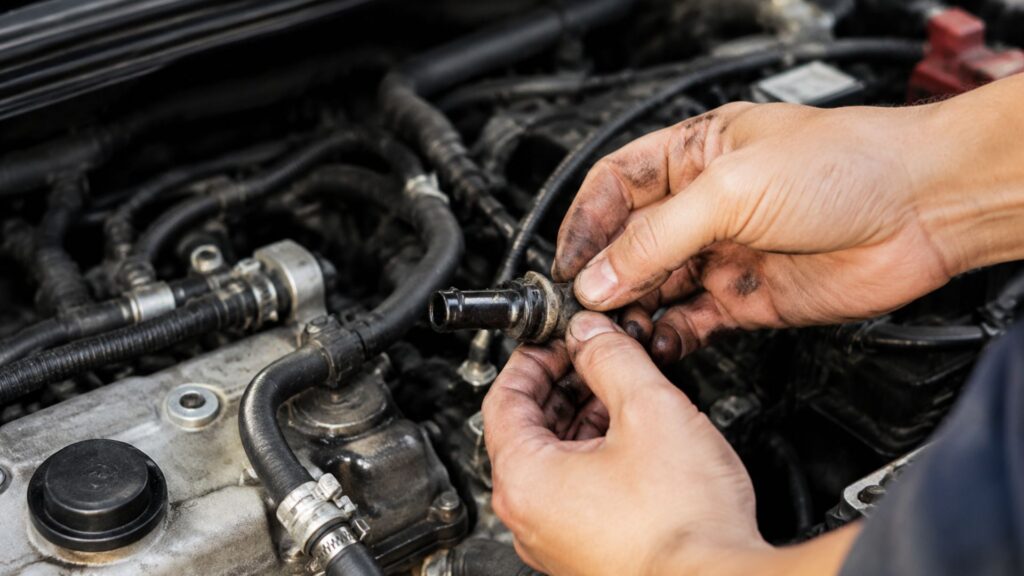
6 Bad PCV Valve Symptoms You Shouldn't Ignore
Most drivers have never thought twice about the PCV valve. It is a small, inexpensive part buried somewhere in your engine bay, and unless something goes wrong, it demands zero attention. That is exactly what makes it so dangerous to ignore.
When this little valve fails, the consequences are anything but small. We are talking about oil leaks, sludge buildup, and, in serious cases, permanent engine damage. The good news? Bad PCV valve symptoms are usually obvious once you know what to look for.
What Does a PCV Valve Actually Do?
PCV stands for Positive Crankcase Ventilation. The crankcase ventilation system exists to deal with a real problem: combustion gases that sneak past your piston rings and collect inside the crankcase. Left alone, those gases would build pressure, contaminate your motor oil, and accelerate engine wear.
The PCV valve acts as a pressure relief. It reroutes those gases from the crankcase back into the intake manifold so they can be burned off during combustion rather than vented into the atmosphere. It works by responding to manifold vacuum, opening and closing like a poppet valve to regulate flow. When the valve sticks open or closed, or the hose connected to it cracks or clogs, the entire system can break down.
Bad PCV Valve Symptoms You Should Never Ignore
1. Oil Leaks and Seeping Gaskets
This is one of the first things people notice. When the PCV valve is stuck closed or the hose is blocked, pressure builds up inside the crankcase with nowhere to go. That pressure pushes against your gaskets and seals – the rocker cover gasket is a common victim – until they start to leak.
You might notice an oil smell, spots on your driveway, or oil residue around the rocker cover. Many people replace the gasket without ever checking the PCV valve, and the leak comes right back.
2. Oil Consumption With No Obvious Leak
If your car is burning through motor oil faster than it should, the PCV system may be pulling oil mist into the inlet manifold and burning it off during combustion. This can happen when the valve is stuck open, allowing too much flow.
You might not see any puddles under the car. The oil is just disappearing, and most drivers assume something more serious is wrong. Always check the PCV valve first.
3. Rough Idle or Engine Misfires
A stuck-open PCV valve creates a vacuum leak. That unmetered air enters the intake system, throws off the air-fuel mixture, and causes the engine to idle rough or misfire. You may feel a shudder at a stoplight or notice the RPMs hunting up and down.
This symptom gets misdiagnosed constantly. Mechanics chase fuel system problems or spark plug issues when the real culprit is a cheap valve causing a vacuum imbalance.
4. Check Engine Light
A failing crankcase ventilation system can absolutely trigger a check engine light. Depending on your vehicle, the ECU may detect unusual fuel trim adjustments or vacuum irregularities tied to PCV system failure.
Vehicles like the Subaru Outback can develop diagnostic trouble codes related to crankcase pressure issues. Because PCV system problems can resemble exhaust gas recirculation faults, proper diagnosis is important before replacing parts.
5. Sludge and Dirty Oil
When the PCV system fails, moisture and combustion gases stay trapped inside the crankcase. Over time, these mix with motor oil and turn into thick, dark sludge. You might notice your oil looks unusually dark shortly after a fresh change, or you may see gunk around the oil filler cap.
Sludge is a long-term engine killer. It restricts oil flow to critical components and causes premature wear throughout the engine.
6. White or Blue Smoke From the Exhaust
Blue or white smoke coming from your tailpipe is a strong signal that oil is being burned in the combustion chamber. A malfunctioning PCV valve is one of the more common causes, especially when it is stuck open and allowing excess oil vapor into the intake.
Do not ignore this. What starts as a valve problem can turn into scored cylinder walls if enough oil gets consumed.
How Often Should the PCV Valve Be Replaced?
Most manufacturers recommend inspecting the PCV valve and hose every 20,000 to 30,000 miles and replacing them as needed. The hose itself is just as important – a cracked or collapsed hose disrupts vacuum flow just as badly as a failed valve. Always replace both together.
This is one of the most overlooked steps during routine maintenance, and it costs very little to address proactively.
When to Get It Checked
If you are noticing any combination of these symptoms – oil leaks, rough idle, oil consumption, or a check engine light – do not sit on it. A PCV valve itself is inexpensive, but the engine damage caused by ignoring a failed one absolutely is not.
Catch Bad PCV Valve Symptoms Before They Cause Engine Damage
A small valve should not be able to wreck your engine, but it can. The crankcase ventilation system is essential to keeping oil clean, pressure balanced, and combustion gases managed properly. If you are seeing any of the symptoms above, it is time to get your vehicle inspected. Schedule an engine repair diagnostic with the team at Newnum and Sons Garage. Call us at 765-793-3334 and let us catch this before it becomes something much more expensive.