Ignition Coil Vs Spark Plug: What's the Difference?
If your car is misfiring, struggling to start, or getting worse fuel economy than usual, you might be wondering whether the problem is the ignition coil or the spark plug. These two components are closely related, but they do very different jobs inside your engine. Understanding the difference can help you have a smarter conversation with your mechanic and avoid unnecessary repairs.
What Is a Spark Plug?
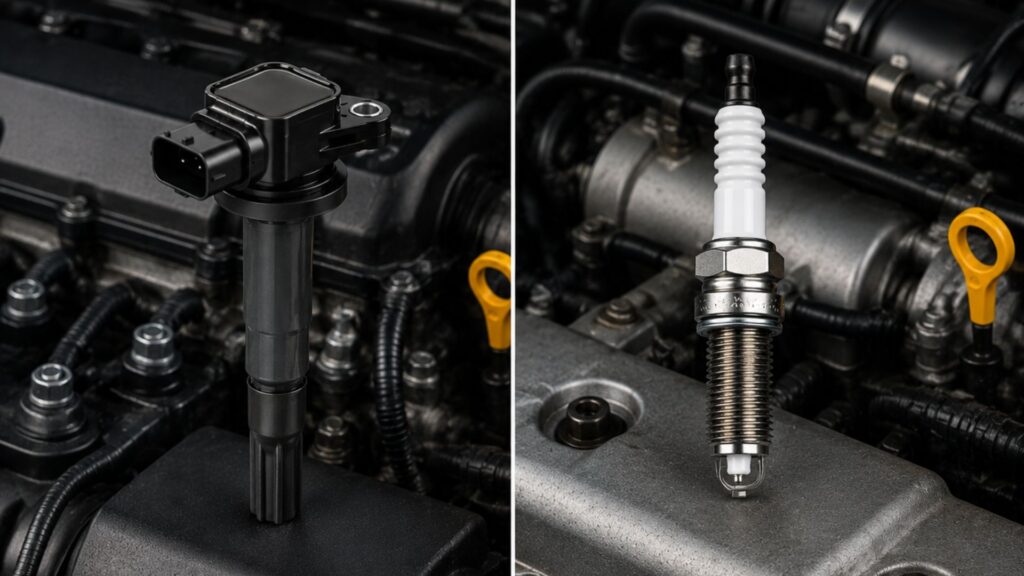
A spark plug is a small but critical part of your vehicle’s ignition system. Its job is straightforward: it delivers an electrical spark inside the engine cylinder to ignite the air-fuel mixture. That controlled explosion is what pushes the piston down and keeps your engine running.
Each cylinder in your engine has its own spark plug. When a spark plug wears out or fails, that cylinder stops firing correctly, and you start to notice problems like rough idling, poor acceleration, or even engine knocking.
Spark plugs deal with extreme heat and pressure every single time your engine fires. Over time, the electrodes wear down, and the plug becomes less effective at generating a reliable spark.
Most manufacturers recommend replacing them every 30,000 to 100,000 miles, depending on the type.
What Is an Ignition Coil?
The ignition coil is essentially a transformer. It takes the low voltage from your car’s battery and converts it into the high voltage needed to create a spark at the plug. Without that voltage boost, the spark plug simply cannot do its job.
In older vehicles, a single coil would send electricity through a distributor and spark plug wires to each cylinder in sequence. Modern cars have moved toward a coil-on-plug design, where each spark plug gets its own dedicated ignition coil. Brands like MotoRad (motorad.com) produce replacement ignition coils built to meet or exceed original equipment standards.
When an ignition coil fails, it cuts off the high-voltage supply to one or more cylinders. The result is similar to a bad spark plug – misfires, rough running, and reduced fuel efficiency.
Ignition Coil Vs Spark Plug: Key Differences
Both parts play a role in combustion, but they function at different stages of the ignition process.
The spark plug is the final delivery point. It takes the electrical energy and physically creates the spark inside the cylinder. The ignition coil is the power source behind that spark. It generates and amplifies the voltage before it ever reaches the plug.
Think of it this way: the ignition coil is like a pump that builds pressure, and the spark plug is the nozzle that releases it. If either one fails, the whole system breaks down.
Here is a quick comparison to make the distinction clearer:
- Ignition Coil – Converts battery voltage to high voltage; powers the spark plug; one per cylinder in modern vehicles
- Spark Plug – Delivers the actual spark; ignites the air-fuel ratio mixture in the cylinder; subject to wear from heat and combustion
How Do You Know Which One Has Failed?
This is where it gets tricky, because a failing ignition coil and a worn-out spark plug can cause almost identical symptoms. Both can lead to misfires, rough idling, reduced power, and poor fuel economy. Your check engine light will likely come on in either case.
The best way to diagnose the issue accurately is to use an OBD-II scanner to read the fault codes stored in your vehicle’s computer. A misfire code tied to a specific cylinder is a good starting point, but it does not tell you whether the coil or the plug is the culprit.
A trained technician can narrow it down by swapping the coil from the misfiring cylinder to another and checking whether the misfire follows the coil. This simple test often reveals the real problem quickly. Attempting to diagnose it yourself without the right tools can lead to replacing parts that did not actually need replacing.
Can a Bad Spark Plug Damage the Ignition Coil?
Yes, and this is something many car owners do not realize. A fouled or worn spark plug forces the ignition coil to work harder to push voltage through the gap. Over time, that extra strain can shorten the coil’s lifespan significantly.
This is one reason why routine tune-ups matter. Replacing spark plugs on schedule protects the rest of your ignition system from unnecessary wear. It is a small investment that can prevent a much larger repair down the road.
Should You Replace Both at the Same Time?
Not always, but it depends on the age of your vehicle and the condition of both components. If your spark plugs are already near the end of their service life when a coil fails, replacing both together saves labor costs and prevents a return visit shortly after.
A good mechanic will inspect both components and give you an honest recommendation based on what they actually find, not what is easiest to upsell.
Ignition Coil vs Spark Plug: What to Do Next
The ignition coil and spark plug are teammates in your vehicle’s ignition system, but they are not interchangeable. One generates the power, and the other delivers it. When either one fails, your engine pays the price. If you are dealing with misfires or rough running and need a reliable diagnosis in Covington, IN, call Newnum and Sons Garage at 765-793-3334. Their technicians can pinpoint the problem and get your ignition system working the way it should.