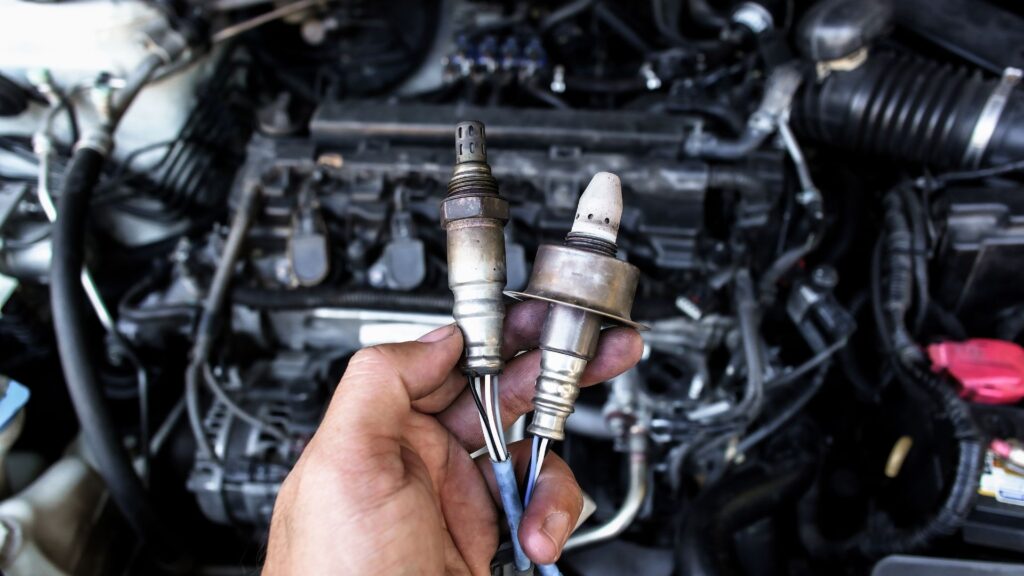
O2 Sensor vs Catalytic Converter: What’s Causing Your Check Engine Light?
Your check engine light pops on, and suddenly, you are wondering what went wrong. Is it the O2 sensor? The catalytic converter? Something worse?
If you have ever searched “O2 sensor vs catalytic converter,” you already know the internet can make this confusing fast. Both parts affect your emissions system, both deal with the exhaust, and both can trigger a warning on your dashboard. But they do very different jobs.
Let’s walk through what each part does, how they fail, and how to tell whether you are dealing with a simple sensor issue or a costly catalytic converter problem.
What Does an O2 Sensor Actually Do?
An oxygen sensor sits in your exhaust stream and measures how much oxygen is in the exhaust gas. That information is sent as a voltage signal to your car’s ECU (engine control unit), which adjusts the air–fuel ratio.
Simply put, the O2 sensor tells your engine if it is running too rich or too lean.
Most vehicles have multiple 02 sensors:
- An upstream O2 sensor (also called the upstream sensor) before the catalytic converter
- A downstream O2 sensor after the converter
These upstream and downstream oxygen sensors work together to keep your engine running efficiently and monitor the Catalyst.
If an oxygen sensor is going bad, you might notice:
- Rough idling
- Poor engine performance
- A drop in fuel economy in automobiles
- Strong fuel smell
- CEL on the dashboard
An O2 sensor can cause incorrect fuel trim adjustments. When the air–fuel ratio starts to fluctuate, your engine performance can suffer quickly.
Over time, sensors go bad. Heat, contamination from burning oil, carbon buildup, or even a simple aging element can cause a sensor to fail. When a sensor goes bad, you may see codes like a P0420 code or other DTC messages through your on-board diagnostics system.
What Does a Catalytic Converter Do?
The Catalytic converter is completely different.
Instead of measuring anything, it performs a chemical reaction called Catalysis. Inside the converter is a catalyst that reduces harmful gases like hydrocarbon emissions into less harmful substances.
In plain English, it cleans up what leaves your exhaust system before it reaches the air. When working properly, the catalytic converter reduces emissions and helps your vehicle pass smog testing. It also helps balance pressure and flow through the manifold and exhaust piping.
If the converter is bad, symptoms may include:
- Sluggish acceleration
- Engine performance problems
- Rattling noise from underneath the vehicle
- Rotten egg smell
- Failed emissions testing
A bad catalytic converter can also create back pressure in the exhaust system, restricting flow.
In severe cases, a clog inside the unit can hurt the engine.
The Classic P0420 Confusion
When drivers see a P0420 code on a scanner or code reader, panic often follows. The P0420 code usually means “catalyst efficiency below threshold.”
But here is the important part: it does not automatically mean you need to replace the catalytic converter.
Sometimes the downstream O2 sensor is bad. Sometimes, a faulty oxygen sensor upstream is giving misleading data. Sometimes there is a vacuum leak, air leaks, misfire, or even an evap monitor issue affecting readings.
This is where proper OBD diagnostics matter. Simply installing a new cat without testing can waste serious money.
O2 Sensor vs Catalytic Converter: How to Tell the Difference
When comparing oxygen sensor or catalytic converter failure, diagnosis is everything.
Look at Live Data, Not Just Codes
A professional mechanic will use a scan tool and watch live data. We look at the graph pattern of the upstream and downstream oxygen sensors.
- The upstream sensor should switch rapidly
- The downstream O2 sensor should stay more stable
If both sensors show a similar graph, the catalyst may not be doing its job. If the downstream O2 sensor readings are erratic, the sensor itself may be faulty.
A single volt difference in the signal can completely change how the ECU interprets data.
Check for Other Engine Problems
A misfire, faulty O2, leaking gasket, or burning oil can damage the converter over time.
A faulty O2 sensor that runs too rich can send unburned fuel into the exhaust. That extra fuel can overheat and damage the converter. Many drivers blame a bad cat when the real issue started months earlier with sensor problems.
Evaluate Performance Symptoms
If your vehicle runs smoothly and only shows a code, that leans toward a sensor issue.
If you notice strong power loss, pressure buildup, or sluggish acceleration, a damaged catalytic converter or a bad cat is more likely.
Can You Replace the Converter Without Replacing Sensors?
Technically, yes, but it is not always smart.
If the oxygen sensor is an original equipment manufacturer OEM and has over 100,000 miles on it, many shops recommend new sensors when installing a new cat. Old sensors may not properly read the new catalyst’s performance.
Installing a new catalytic converter without addressing a faulty catalytic sensor setup could mean the code comes right back.
What about using a cat cleaner?
Products like cat cleaner, Seafoam, or Techron promise to clean deposits. In some mild cases, especially if carbon buildup is the issue, they can help. But if the catalyst material is broken, melted, or physically damaged, nothing in a bottle will fix it.
A parts store may suggest additives first, but if the converter is bad or internally clogged, those solutions will not solve it.
Real-World Example
We recently saw a Toyota with a Toyota AZ engine throwing a P0420. The owner had already replaced the catalytic converter once. The code came back. The issue turned out to be a faulty upstream O2 sensor, causing improper fuel trim readings. The new cat was fine.
Proper data analysis from live data streams showed the signal problem clearly. A simple sensor replacement solved it.
When to Visit a Professional Mechanic in Covington, IN
If you are unsure whether your sensor is bad or if you truly have a catalytic converter problem, guessing usually costs more in the long run. At Newnum and Sons Garage, we use professional scan tools, image scanner tools for visual inspections, and advanced diagnostics to pinpoint the exact issue. You can learn more about our advanced car computer diagnostics services.
Sometimes drivers ignore early signs like rough idling or why your check engine light comes on and off. That delay can damage the converter. If the problem traces back to deeper engine trouble, our professional engine repair services can address the root cause.
And many issues tied to sensors and converters fall under the most common car repairs and fixes we see daily.
Better yet, keeping up with routine preventative maintenance for your vehicle reduces the chance of ever facing a faulty catalytic failure in the first place.
Frequently Asked Questions
Can a bad O2 sensor trigger a P0420?
Yes. A bad O2 or faulty oxygen sensor can send inaccurate readings that make the system believe the catalyst efficiency is low.
How long do catalytic converters last?
Most last well over 100,000 miles unless engine issues, Oil burning, or fuel problems damage the converter early.
Is it covered under warranty?
Many vehicles have extended emissions warranty coverage on the emissions system. Always check your paperwork before spending money out of pocket.
Can I drive with the CEL on?
Short term, maybe. Long term, a faulty condition can lead to bigger problems – including damage to the converter itself.
The Bottom Line
When it comes to O2 sensor vs catalytic converter issues, guessing costs more than diagnosing.
Sometimes the sensor can cause the issue. Other times, the cat is bad. The only way to know is through proper testing, not assumptions.
If your check engine light is on in Covington, IN, bring your vehicle to Newnum and Sons Garage. Call 765-793-3334 and let an experienced mechanic check the data, inspect the system, and explain exactly what is happening. Clear answers save money, protect your engine, and keep your car running the way it should.