Timing Belt vs Timing Chain: Which One Saves You Money And Headaches?
If you have ever asked yourself, ” What’s the difference between a timing belt and a timing chain? You are not alone. It is one of the most common questions drivers have when they learn about their engine. And usually, the next question is even more important: which one costs less over time and causes fewer problems?
Understanding the difference between timing components can save you major repair bills and serious engine damage. At Newnum and Sons Garage in Covington, IN, we regularly help drivers learn the difference so they can make smart decisions about maintenance instead of reacting to a breakdown.
Let’s break down the timing belt vs timing chain debate in plain English.
What Does the Timing System Actually Do?
Before comparing parts, it helps to understand the timing system as a whole.
Inside your engine, the crankshaft and camshaft must spin in perfect sync. The crankshaft moves the pistons up and down. The camshaft opens and closes each valve – often a poppet valve in a typical four-stroke engine – to let air and fuel in and exhaust out.
That coordination is called engine timing.
Whether your vehicle uses a timing belt or a timing chain, its job is the same:
- Keep the camshaft and crankshaft synchronized
- Maintain proper timing of valves and pistons
- Prevent catastrophic engine damage
If the system fails, valves and pistons can collide. In an interference engine, that usually means bent valve components, damaged pistons, and a large repair bill.
Now let’s talk about the key differences.
Timing Belt: What You Should Know
A timing belt is a reinforced rubber belt (mechanical belt type) with teeth that grip gears and sprockets. Timing belts are made from reinforced rubber and synthetic fibers to handle heat and tension.
Many older vehicles and even popular models like certain versions of the Honda Accord use a timing belt.
How It Works
The belt wraps around:
- The crankshaft gear
- The camshaft gear
- An idler pulley
- A tensioner to maintain proper tension
In many timing belt setups, the water pump is also driven by the belt. That means when you are replacing a timing belt, you often replace the pump at the same time to avoid extra cost later.
Pros of a Timing Belt
- Quieter operation with less noise
- Lower upfront cost for belt replacement
- Lightweight design
Cons of a Timing Belt
- Wears out over time
- Has specific service intervals
- If a belt breaks, it can cause severe engine damage
Most manufacturers recommend timing belt replacement around 100k miles, depending on the vehicle. Since timing belts wear from heat and friction, replacing a timing belt before failure is critical.
If you drive an older car with a belt and skip maintenance, the pain of a snapped belt can be sudden and expensive.
Timing Chain: Built for the Long Haul?
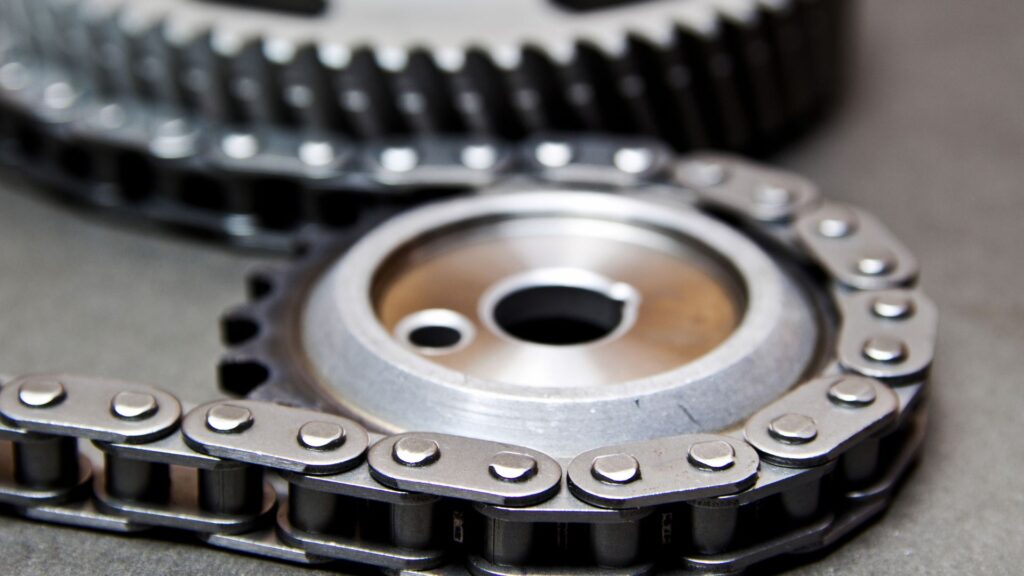
A timing chain looks similar to a bike chain. It is metal and runs inside the engine, lubricated by motor oil.
Unlike belts, chains are designed to last much longer, and in many modern engines, they are expected to last the lifetime of the engine.
How It Works
The chain connects the crankshaft gear to the camshaft gear using metal links. It rides along sprockets and relies on chain guides and tensioners to stay aligned.
Because it runs internally, lubrication from regular oil changes is essential to reduce wear.
Pros of a Timing Chain
- Timing chains last longer than belts
- More durable compared to timing belts
- Often no scheduled chain replacement
Cons of a Timing Chain
- Heavier and slightly noisier
- More expensive to replace
- The complexity of the job makes labor costs higher
Although timing chains last longer, they can stretch over time. Worn guides and tensioners may also fail. If that happens, replacing a timing chain can be costly because of the complexity of the job.
Timing Belt vs Timing Chain: The Real Cost Comparison
When customers in Covington, IN ask about timing belt vs timing chain, they are usually focused on overall cost.
Here is the reality.
Short-Term Cost
A timing belt replacement is typically less expensive than replacing a timing chain. The parts are cheaper, and access is often easier depending on the engine layout, such as an OHC V6 engine.
Long-Term Cost
Timing chains last longer and can sometimes run for the lifetime of the engine. That means no regular belt service intervals to worry about.
However, if a chain fails, chain replacement is usually more expensive to replace than a typical belt service. So the chain vs belt decision is not about which is “better.” It is about understanding the difference between a timing system design and planning accordingly.
What’s the Difference in Risk?
Let’s talk about risk.
If your engine is a non-interference design, a failed belt may not destroy internal components.
But many engines are interference engine designs. In those engines, if a belt breaks or a plastic timing chain guide fails, pistons can hit valves.
That results in:
- Bent valves
- Damaged pistons
- Possible gasket failure
- Severe engine damage
This is why regular maintenance matters so much.
Why Maintenance Matters More Than Design
Here is something many drivers do not realize.
Since timing components rely on proper lubrication and tension, neglecting oil changes can shorten the life of a timing chain. Dirty oil increases wear and can cause guides to fail.
Many timing chain problems stem from poor maintenance, not just mileage. On the other hand, belts are external and not lubricated by engine oil. They simply age and wear. That is why proper timing belt replacement at recommended intervals is key.
If you are not sure what your car uses, the team at Newnum and Sons Garage can help you learn the difference between a timing belt and a timing chain in your specific vehicle.
Diesel Engines, Manual Transmissions, and Modern Designs
Some diesel engines prefer chains because of higher compression forces. Many modern engines across the automotive industry have shifted to chain designs, including models from
Honda and Ford Motor Company.
However, there are still vehicles that use a timing belt or timing chain, depending on the manufacturer’s engineering goals for fuel efficiency, noise reduction, and cost. Transmission type, such as a manual transmission, does not usually affect which timing component your engine uses. It is primarily an engine design decision.
Signs You May Have a Timing Problem
If your timing component is failing, you might notice:
- Rattling noise from the engine
- Rough running
- Trouble starting
- Reduced fuel efficiency
You may even wonder why your check engine light comes on and off. In some cases, a stretched chain or worn belt can affect sensor readings and trigger warning lights.
Ignoring symptoms can make the overall cost much higher later.
When Should You Consider Replacing a Timing Component?
Here are general guidelines:
- Replacing a timing belt should follow manufacturer service intervals, often around 100k miles.
- Replacing a timing chain is usually only necessary if there are symptoms like noise or slack.
If you are unsure, professional diagnostics matter. Complex engine timing inspections fall under professional engine repair services, not guesswork.
For long-term peace of mind, schedule routine preventative maintenance services instead of waiting for failure.
Timing components are also among the most common car repairs and fixes we see when maintenance has been delayed.
If repair work is needed, Newnum and Sons Garage offers comprehensive auto repair services to handle everything from inspection to full replacement.
Understanding the Difference Saves You Money
The difference between a timing belt and a timing chain comes down to materials, longevity, maintenance needs, and repair cost.
- Timing belts are made of reinforced rubber and require scheduled replacement.
- Timing chains last longer, are metal, and rely heavily on oil quality.
Neither is automatically better. The key differences lie in maintenance expectations and risk if ignored.
Understanding the difference between a timing belt and a chain helps you plan instead of panicking.
Conclusion
When it comes to timing belt vs timing chain, there is no one-size-fits-all answer. The smart move is understanding what your engine uses and staying ahead of service intervals. In Covington, IN, Newnum and Sons Garage helps drivers avoid surprises by explaining their options clearly and performing careful inspections. If you are unsure what your vehicle has or whether it needs attention, call 765-793-3334 and talk with a technician who will give you honest guidance and practical next steps.