What Does a Bad U-Joint Sound Like? Warning Noises You Shouldn't Ignore
If your vehicle has started making strange sounds you can’t quite place, the u-joint might be the culprit. Most drivers don’t think about u-joints until something goes wrong, but catching the warning signs early can save you from a much bigger repair down the road.
What Is a U-Joint and What Does It Do?
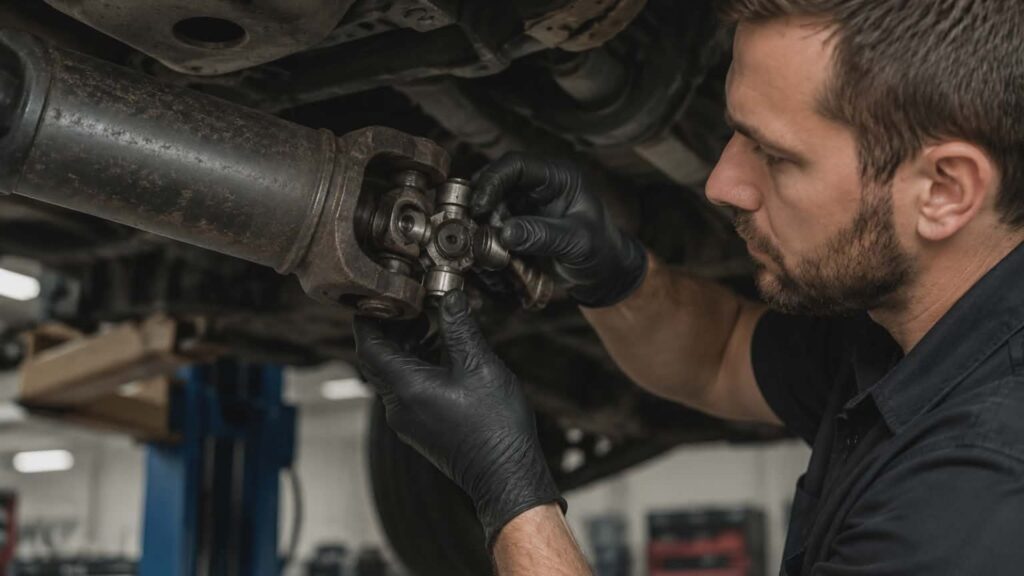
A u-joint, short for universal joint, connects your driveshaft to the transmission and differential, allowing power to flow smoothly to your wheels even as the drivetrain moves up and down. On trucks and four-wheel drive vehicles, these joints take on a lot of stress. Over time, wear, rust, and lack of lubrication cause them to degrade.
What Does a Bad U-Joint Sound Like?
This is the question most drivers are asking, and the answer depends on how far along the damage has progressed.
Clunking or Banging Noise
One of the earliest and most common symptoms of a bad u-joint is a loud clunking sound when you shift into drive or reverse. The clunking or banging tends to be most noticeable when the vehicle first starts moving, especially when transitioning between gears. Worn u-joints are often a contributing cause of car shaking at high speeds.
Squeaking Sound at Low Speeds
A squeaking sound, especially at lower speeds, is another symptom of a failing u-joint. This noise often comes from dry bearing caps that have lost their grease due to corrosion or poor maintenance. Metal rubbing against metal is never a good sign, and it tends to get louder as the joint continues to wear.
Vibration While Driving
Vibration that gets worse at higher speeds is a common indicator of bad U-joints. When a joint starts to fail, the driveshaft can no longer rotate smoothly, causing the entire vehicle to vibrate.
This is different from a tire balance issue, so if the problem feels like it is coming from underneath the car rather than the steering wheel, the driveline deserves a close look. You can learn more about common car repairs and maintenance to see how these problems connect.
Other Signs of U-Joint Failure
Beyond sound and vibration, visible rust on the joint, excessive play in the driveshaft, or a loose feeling in the rear of the vehicle can all indicate that your u-joints may be overdue for inspection. On 4WD vehicles, a failing joint near the transfer case can cause drivetrain binding or unusual behavior during turns.
Bad u-joints do not always announce themselves dramatically. Sometimes the damage builds gradually until a component fails entirely.
Why U-Joints Fail
U-joints fail most commonly due to lack of lubrication, exposure to dust and moisture, or simple age-related wear. Replacing a u-joint with a quality kit and proper grease is straightforward when caught early. Delaying replacement risks driveshaft damage and a much more expensive repair.
For deeper drivetrain concerns, our team also offers expert transmission repair and diagnostics to keep your vehicle running right from engine to axle.
Conclusion
Do not ignore unusual sounds coming from beneath your vehicle. A clunking sound, a persistent squeak, or an unexplained vibration could all point to a bad u-joint in need of attention. The team at Newnum and Sons Garage in Covington, IN, is ready to inspect your vehicle and give you a straight answer.
Reach out to a trusted mechanic before a small joint problem turns into a full driveline failure. Call us at 765-793-3334 or learn more about our professional driveline repair services today.