6 Head Gasket Symptoms You Shouldn't Ignore (and What They Mean)
Your car has been running a little off lately. Maybe the temperature gauge is creeping higher than usual, or you noticed something strange in the exhaust. You’re not sure what’s wrong, but something feels different. There’s a chance your head gasket is trying to tell you something.
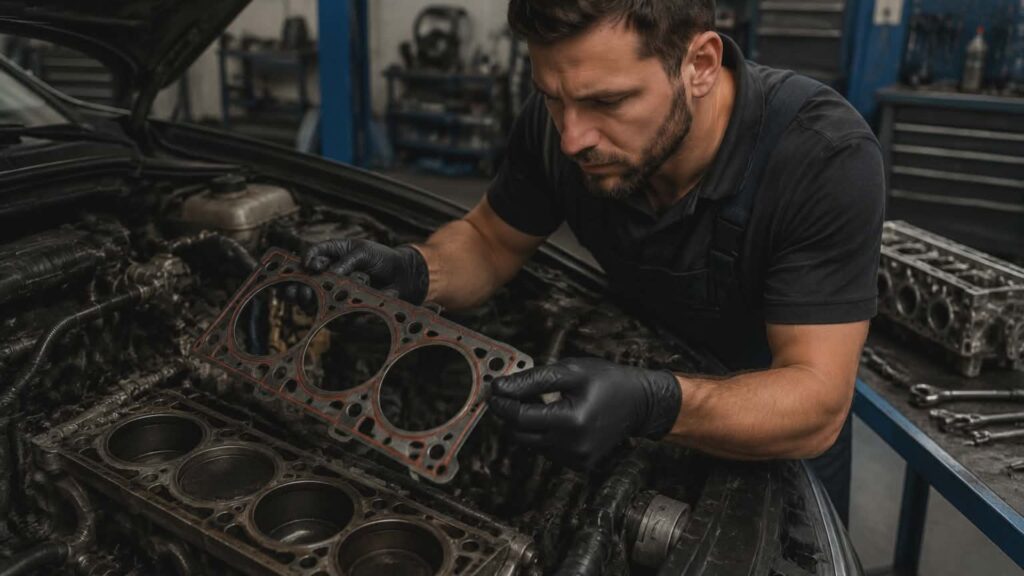
The head gasket is an engine component that does a critical job. The head gasket is a seal that sits between the engine block and cylinder head, keeping coolant, oil, and combustion gases in their proper passages. When it starts to fail, the consequences can escalate quickly. Knowing the head gasket symptoms early can save you from a much bigger repair bill down the road.
What Does a Head Gasket Actually Do?
The cylinder head gasket seals the connection between the engine block and cylinder head. It has to hold up against extreme heat and pressure while keeping coolant and oil from mixing together and preventing exhaust gas from escaping the combustion chamber.
Every time your engine fires, the piston compresses a fuel and air mixture inside the cylinder. That compression creates intense force, and the gasket is what keeps everything contained. When a gasket blows, that careful separation breaks down, and engine problems follow fast.
Common Signs of a Blown Head Gasket
Recognizing the warning signs early is everything. Here are the most common signs of a blown head gasket to watch for.
White Smoke From the Exhaust
One of the clearest blown head gasket symptoms is white smoke pouring from the exhaust. This happens when coolant leaking into the combustion chamber gets burned along with the fuel.
The result is thick, sweet-smelling white smoke that is different from the light condensation you might see on a cold morning.
If the white smoke is heavy and doesn’t disappear after the engine warms up, that’s a red flag. A leaking head gasket is often the culprit, and continuing to drive the vehicle in this condition risks severe engine damage.
Engine Overheating
Engine overheating is one of the most serious head gasket symptoms you can experience. The head gasket can cause coolant to leak either internally or externally, and when coolant levels drop, the cooling system can’t regulate engine temperatures properly.
Check your coolant reservoir. If the level keeps dropping without any visible external coolant or oil puddles underneath the car, there’s a good chance the coolant is leaking internally. Don’t ignore a rising temperature gauge – catching this early can prevent a cracked engine block or warped cylinder head.
If your car’s heating and cooling system has been acting up, getting a proper inspection matters.
Problems with the car heating and cooling system repair can reveal issues before they become catastrophic.
Milky or Contaminated Oil
Pop the oil cap and take a look. If you see a creamy, chocolate-milk-colored residue, that’s a serious sign of a bad head gasket. This happens when coolant and oil mix together, creating a contaminated sludge inside the engine.
Oil and coolant are not meant to share the same space. When they mix, the contaminated oil loses its lubrication properties and can damage engine components rapidly. This is one of the head gasket issues you simply cannot afford to delay addressing.
You can also learn more about what it means when your car is leaking oil to better understand oil-related warning signs.
Bubbling in the Coolant Reservoir or Radiator
Combustion gases in the coolant system point to a serious head gasket leak. When the gasket fails, exhaust gases can push through and enter the cooling system, causing the coolant to bubble as if it’s boiling – even when the engine hasn’t reached full operating temperature.
You might notice this in the coolant reservoir or radiator cap area. It’s a tell-tale sign that gases in the coolant are present and that the seal between the engine block and combustion chamber has been compromised.
Poor Engine Performance
A blown head gasket can cause a noticeable drop in power. When the gasket fails, it can affect cylinder compression, which means the fuel and air mixture isn’t being burned efficiently. You might feel rough acceleration, misfires, or an overall sluggishness that wasn’t there before.
Poor engine performance combined with any of the other signs mentioned here is a strong indicator that it’s time for a proper inspection. A check engine light that won’t go away is also worth investigating – here’s a helpful resource if you’re dealing with a check engine light that comes on and off.
External Coolant or Oil Leak
Sometimes a head gasket leak shows up on the outside of the engine. You might notice a coolant or oil stain along the block and head area, or smell something sweet near the engine bay. An external coolant or oil leak doesn’t always mean a fully blown gasket – it could be a minor leak – but it still needs attention before it becomes something worse.
A minor leak left unaddressed will worsen with time, especially under the kind of heat cycles a typical engine goes through. A coolant smell in your car is also worth checking out – you can read more about a coolant smell in the car when the heater is on for more context.
How Mechanics Confirm a Blown Head Gasket
To confirm a blown head gasket, a trained technician will perform several diagnostic checks.
These typically include a compression test to identify cylinder pressure loss, a chemical block test to detect exhaust gases in the coolant, and a careful visual inspection for oil passages that have been breached.
Head gasket failure isn’t always obvious at first glance. That’s why professional diagnostics matter – guessing can lead to unnecessary repairs, while a proper diagnosis gets it right the first time.
How to Prevent a Blown Head Gasket
The best way to prevent a blown head gasket is to stay on top of your cooling system maintenance. Keeping coolant at the proper level, using the correct antifreeze mixture, replacing the thermostat when needed, and catching overheat issues early all go a long way toward protecting the gasket.
Regular oil changes and paying attention to engine warning signs also help. The goal is to prevent coolant and oil from leaking where they shouldn’t and to allow coolant to flow freely through its proper passages. Head gaskets don’t typically blow without warning – the engine is usually giving signals well before a gasket blows.
When You Need to Replace the Head Gasket
If you suspect a blown head gasket, don’t wait. The longer a head gasket is blown, the more damage spreads to surrounding engine parts. You may eventually need to replace the head as well if warping has occurred. Head gasket repair is a detailed job that requires skilled hands, quality parts, and the right diagnostic approach.
At Newnum and Sons Garage, the team offers professional engine repair services and will walk you through exactly what’s going on before any work begins. You’ll always know what to expect, with upfront estimates and no surprises.
Conclusion
Head gasket symptoms are your engine’s way of asking for help. Whether it’s white smoke from the exhaust, milky oil, engine overheating, or poor engine performance, these signs of a blown head are worth taking seriously. Catching a head gasket leak early can mean the difference between a straightforward repair and a full engine rebuild. If anything in this article sounds familiar, give Newnum and Sons Garage a call at 765-793-3334. The team in Covington is ready to diagnose the problem and get your vehicle back on the road safely.