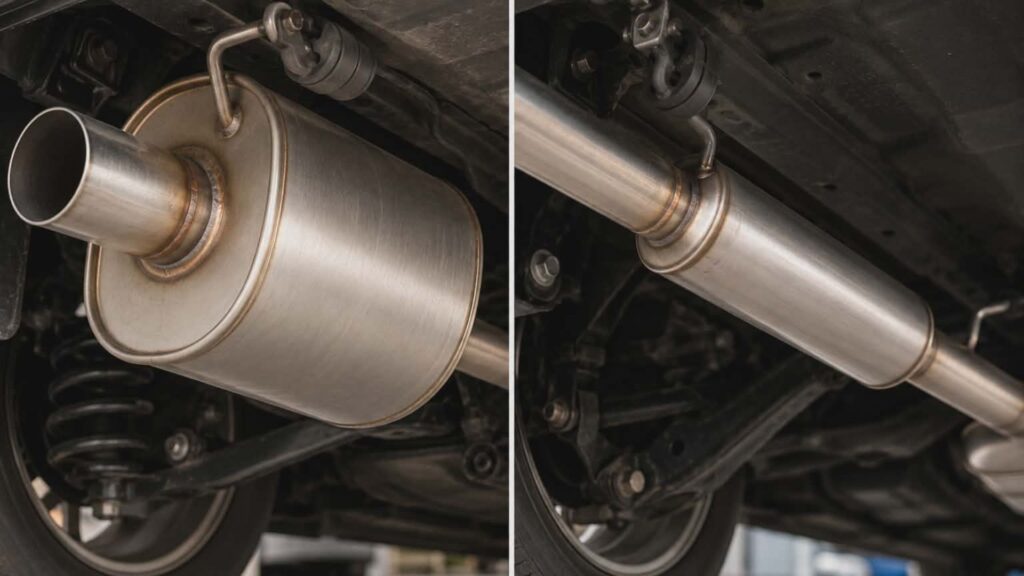
Muffler vs. Resonator: What Is the Difference for Your Car?
When comparing a muffler vs. a resonator, it is easy to understand why drivers confuse the two. Both are part of the exhaust system, and both help manage the sound your vehicle produces. However, they do not serve the same purpose.
A muffler primarily reduces overall exhaust volume, while a resonator helps control specific tones, such as humming or droning sounds at certain speeds. Understanding the difference can help you make informed decisions when your exhaust system needs repairs or replacement parts.
What Does a Muffler Do?
The muffler is one of the most recognizable components of a vehicle’s exhaust system. It is generally located near the rear of the vehicle, after the catalytic converter, and its main purpose is to reduce the noise created by exhaust gases leaving the engine.
As the engine runs, exhaust gases travel through the exhaust system and eventually reach the muffler. Inside the muffler, chambers, tubes, and sound-absorbing materials help reduce noise before the gases exit through the tailpipe.
Without a functioning muffler, your vehicle may sound significantly louder than normal, especially during acceleration.
Common Types of Mufflers
Different muffler designs can affect both the sound and character of a vehicle’s exhaust. Common types include:
- Chambered mufflers: These use internal chambers to help reduce sound while often producing a deeper exhaust tone.
- Straight-through mufflers: Sometimes called glasspacks, these use a perforated tube surrounded by sound-absorbing material to reduce noise while allowing exhaust gases to flow through.
- Turbo mufflers: These use internal passages and chambers to provide quieter, more refined sound control.
The right muffler depends on your vehicle, driving preferences, and whether you want a quieter ride or a more noticeable exhaust tone.
What Does a Resonator Do?
A resonator is another exhaust system component, but it is not the same as a muffler. It is often installed between the catalytic converter and the muffler, although its location can vary depending on the vehicle.
Instead of reducing overall exhaust volume, a resonator is designed to reduce specific sound frequencies. In particular, it may help control the droning or humming sound that can occur while cruising at a steady speed.
This type of exhaust drone can become especially noticeable inside the cabin during highway driving. A properly functioning resonator helps smooth out these unwanted tones without dramatically changing the overall volume of the exhaust system.
When a resonator is removed or damaged, a vehicle may develop a raspier, harsher, or more noticeable exhaust sound, depending on the overall system design.
Do You Need Both a Muffler and a Resonator?
Many factory exhaust systems include both a muffler and a resonator because they perform different jobs.
The muffler reduces the overall noise level produced by the exhaust system. The resonator helps reduce certain tones or vibrations that may otherwise create an unpleasant sound inside the cabin.
Together, these parts can help provide a quieter, smoother driving experience. Removing or replacing either component may change the way your vehicle sounds. In some cases, modifications can also affect how the exhaust system performs, depending on the vehicle and the parts installed.
A performance muffler paired with a resonator may create a cleaner exhaust tone without excessive cabin noise. Removing both components, however, may leave your vehicle sounding louder, raspier, or more prone to highway drone.
Signs Your Muffler or Resonator May Need Attention
Over time, exhaust components can wear out because of heat, moisture, rust, road debris, or physical damage. You may need an inspection if you notice:
- Louder exhaust noise than usual
- Rattling or vibrating sounds underneath the vehicle
- A humming or droning sound at certain speeds
- Visible rust or corrosion on exhaust components
- Exhaust odors near or inside the vehicle
- Changes in vehicle performance or fuel efficiency
Exhaust odors inside the cabin should be taken seriously. Because exhaust gases can be hazardous, arrange for a professional inspection promptly if you smell fumes while driving.
Muffler vs. Resonator: Which One Is Causing the Problem?
Because the muffler and resonator are both parts of the exhaust system, it may be difficult to identify the source of a noise or odor without an inspection.
A damaged muffler may cause the vehicle to sound much louder overall. A failing resonator may create rattling, buzzing, or excessive drone at certain speeds. However, similar symptoms can also result from damaged pipes, loose connections, rusted hangers, or leaks elsewhere in the exhaust system.
A technician can inspect the system, determine which component is damaged, and recommend the appropriate repair or replacement.
Schedule Exhaust System Service in Covington, IN
The difference between a muffler and a resonator comes down to purpose. A muffler helps reduce overall exhaust noise, while a resonator helps control specific tones such as drone, hum, or harsh buzzing.
When your vehicle starts making unusual noises or producing exhaust odors, do not ignore the problem. The team at Newnum and Sons Garage in Covington, IN, can inspect your exhaust system and recommend the repair your vehicle needs.
Call 765-793-3334 to schedule your appointment today.