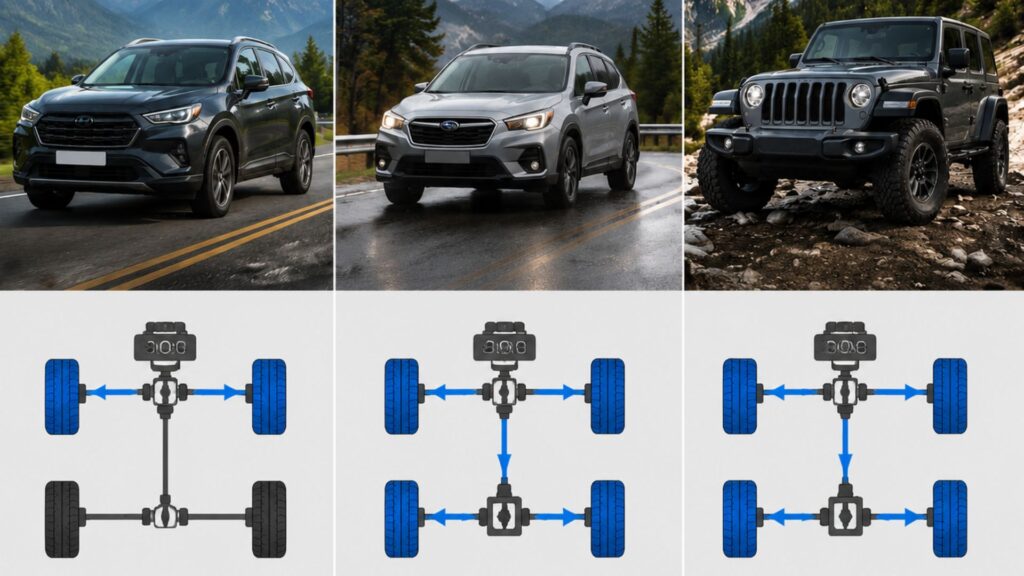
2WD vs 4WD vs AWD: Which Is Right for Your Driving Style?
If you’ve ever stood in a dealership lot or scrolled through vehicle listings feeling completely lost when it comes to drivetrain options, you are not alone. Two-wheel drive, four-wheel drive, all-wheel drive – it sounds like alphabet soup, and the differences actually matter a lot depending on how and where you drive.
Let’s break it all down in plain language so you can make a smarter decision, whether you’re buying your next car, truck, or crossover SUV.
What Does “Drive” Actually Mean?
Every vehicle has an engine that produces torque, and that power has to get to the wheels somehow. The drivetrain is the system that makes that happen – including the transmission, drive shaft, axle, and differential. The key question is: which wheels are actually receiving that power?
That answer changes everything about how your vehicle handles traction, fuel efficiency, and performance on different road surfaces.
Two-Wheel Drive (2WD): Simple, Efficient, and Underrated
Two-wheel drive means only two of your vehicle’s wheels receive power from the engine. That power typically goes to either the front wheels (front-wheel drive) or the rear wheels (rear-wheel drive).
- Front-wheel drive is the most common setup for everyday cars and crossover SUVs. It’s generally more fuel-efficient and handles reasonably well in light snow. Most passenger sedans and family vehicles use this layout.
- Rear-wheel drive is popular in pickup trucks, sports cars, and performance vehicles. It tends to offer better acceleration and a more balanced driving feel, but it can struggle in slippery conditions without snow tires.
The biggest advantage of two-wheel drive? Cost and simplicity. Fewer mechanical components mean less to maintain and better fuel economy overall.
Four-Wheel Drive (4WD): Built for the Tough Stuff
Four-wheel drive sends engine power to all four wheels simultaneously, typically through a transfer case that locks the front and rear differentials together. This setup is common in trucks and body-on-frame SUVs.
Most 4WD systems are part-time, meaning you manually switch between 2WD and 4WD depending on conditions. Some systems, like those found in many pickup trucks, allow you to engage 4WD on the fly. Off-roading, muddy fields, and deep snow are where four-wheel drive really earns its reputation.
One thing worth knowing: driving in 4WD on dry pavement can actually damage the drivetrain by causing binding in the gear train and differential. It’s meant for low-traction situations, not your daily commute.
All-Wheel Drive (AWD): The Everyday Traction Solution
An all-wheel drive vehicle continuously monitors wheel slip and automatically distributes torque to whichever wheels need it most. Unlike 4WD, you don’t flip a switch – the system handles it for you.
Brands like Subaru have built entire reputations on their AWD systems, and it’s no surprise.
AWD works great in light snow, rain, and mixed road conditions without requiring any input from the driver. Many modern electric vehicles and crossover SUVs also come standard with AWD by using an electric motor on each axle.
The trade-off? An AWD system adds weight and mechanical complexity, which typically reduces fuel efficiency compared to a standard two-wheel drive setup. It’s also more expensive to repair when something goes wrong.
So Which One Should You Choose?
Here’s a practical way to think about it:
- Daily commuting on paved roads with occasional rain or light snow: Front-wheel drive or AWD handles this well. You likely do not need 4WD.
- Regular off-roading, hauling heavy loads, or navigating serious terrain: A true four-wheel drive truck or SUV with a transfer case is the right tool.
- Mixed conditions with a preference for automatic handling: An all-wheel drive vehicle strikes a solid balance between capability and convenience.
- Budget-conscious buyers or those in mild climates: Two-wheel drive keeps costs down and fuel efficiency up.
Your powertrain choice should match your actual driving habits, not just sound impressive on paper.
Does Your Drivetrain Affect Maintenance?
Absolutely. AWD and 4WD systems involve more components – differentials, transfer cases, clutch packs – and those parts need regular service too. Skipping transmission fluid changes or ignoring drivetrain service can lead to expensive repairs down the road.
Your tires also play a huge role in how well any drivetrain performs. A quality set of snow tires on a front-wheel drive car will often outperform a neglected AWD vehicle. Tire condition and wheel alignment matter more than most drivers realize.
Which Drivetrain Fits Your Driving Needs?
Choosing between 2WD, 4WD, and AWD comes down to your driving habits, budget, and the road conditions you face most often. There is no universally right answer – just the right answer for you. If you are unsure whether your current drivetrain system is in good shape or overdue for service, the team at Newnum and Sons Garage can help. Schedule a transmission or drivetrain inspection and get honest answers from technicians you can trust. Call us at 765-793-3334 to set up an appointment.