Common Drivetrain Issues and How to Fix Them Before They Get Worse
Your car might feel fine one day and start shaking, grinding, or slipping the next. More often than not, the culprit is somewhere in the drivetrain issues – a complex system that transfers power from the engine to the wheels. When something goes wrong here, it rarely fixes itself.
Understanding the warning signs early can save you from a much bigger repair bill down the road.
What Is the Drivetrain, Exactly?
The drivetrain includes every component that moves power from the engine to the tires. That means the transmission, drive shaft, axle, differential, constant-velocity joint (CV joint), universal joint, and, in four-wheel drive vehicles, the transfer case as well.
Each part has a specific job, and when one wears down, the others pick up the slack – until they can’t anymore.
Common Drivetrain Problems and Their Warning Signs
Transmission Slipping or Hesitation
One of the most frequent complaints is a transmission that slips between gears or hesitates during acceleration. You might notice the engine revving higher than usual without a matching increase in speed.
This is often caused by low or degraded hydraulic fluid, worn clutch components in a manual transmission, or internal gear damage. Catching it early usually means a fluid service or minor repair. Ignoring it often means a full rebuild.
Vibration While Driving
If your vehicle shakes during acceleration or at highway speeds, the drive shaft or CV joint is a likely suspect. A damaged universal joint can also create a rhythmic vibration that gets worse over time.
Worn tires and wheel alignment issues can mimic these symptoms, which is why a proper diagnosis matters before any parts are replaced.
Clicking or Clunking Noises
A clicking noise when turning is a classic sign of a failing constant-velocity joint. A clunk when shifting from park to drive often points to a worn universal joint or loose drive shaft connection.
These noises are your vehicle communicating wear and tear before it becomes a breakdown.
Don’t wait on these.
Fluid Leaks Under the Vehicle
Spotting a puddle under your car is never a good sign. Drivetrain fluid leaks can come from the transmission, differential, or transfer case. These fluids are essential for the lubrication and cooling of moving parts.
A slow leak leads to low fluid levels, which accelerates wear and can eventually cause catastrophic failure. If you see a reddish or brownish fluid under your vehicle, get it checked.
Dashboard Warning Lights
Modern vehicles monitor drivetrain health through sensors. A check engine light or transmission warning light on your dashboard is not something to dismiss.
Even a vague warning can point to a very specific issue when read with a diagnostic scanner.
An auto mechanic can pull the code and pinpoint the problem quickly.
What Makes Drivetrain Wear Worse?
Aggressive driving habits accelerate wear on nearly every drivetrain component. Hard acceleration, late braking, and towing beyond your vehicle’s rated capacity all put extra stress on the transmission, axle, and differential.
Skipping routine maintenance – like fluid changes and inspections – is another fast track to expensive repairs. Many drivetrain issues are entirely preventable with consistent upkeep.
How to Stay Ahead of Drivetrain Problems
Staying ahead of drivetrain issues comes down to a few consistent habits:
- Check for fluid leaks regularly, especially after parking overnight
- Pay attention to new noises, vibrations, or changes in how the vehicle shifts
- Follow your vehicle’s recommended maintenance schedule for transmission and differential fluid changes
- Have your CV joints, drive shaft, and universal joints inspected during routine service visits
- Address warning lights promptly rather than waiting to see if they clear on their own
These steps apply whether you’re driving a daily commuter or a four-wheel drive truck that sees rougher conditions.
When to See a Mechanic
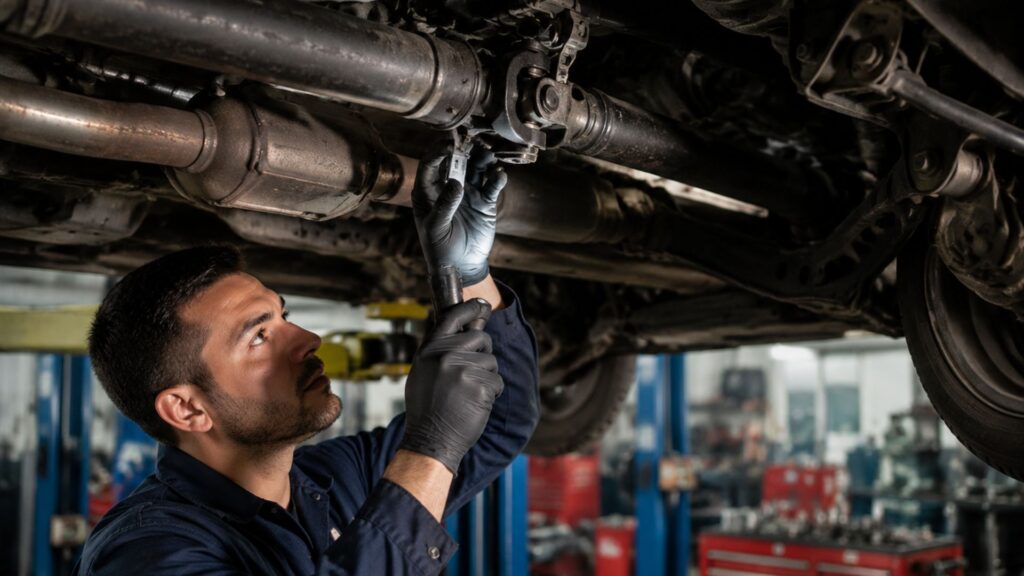
If you’re noticing any combination of the symptoms above – noise, vibration, leaks, or shifting problems – it’s time for a professional inspection. Drivetrain diagnosis requires the right equipment and experience to get it right the first time.
Guessing at the problem and replacing parts randomly wastes money and time.
Keep Your Drivetrain Running Smoothly
Drivetrain problems rarely appear out of nowhere – they build slowly through wear, fluid loss, and neglect. Catching the early signs of transmission trouble, CV joint wear, or a leaking differential gives you options before the repair becomes urgent.
If your vehicle has been sending you signals you’ve been putting off, now is the time to act. Schedule a transmission inspection with the team at Newnum and Sons Garage, or call 765-793-3334 to talk through what you’re experiencing.