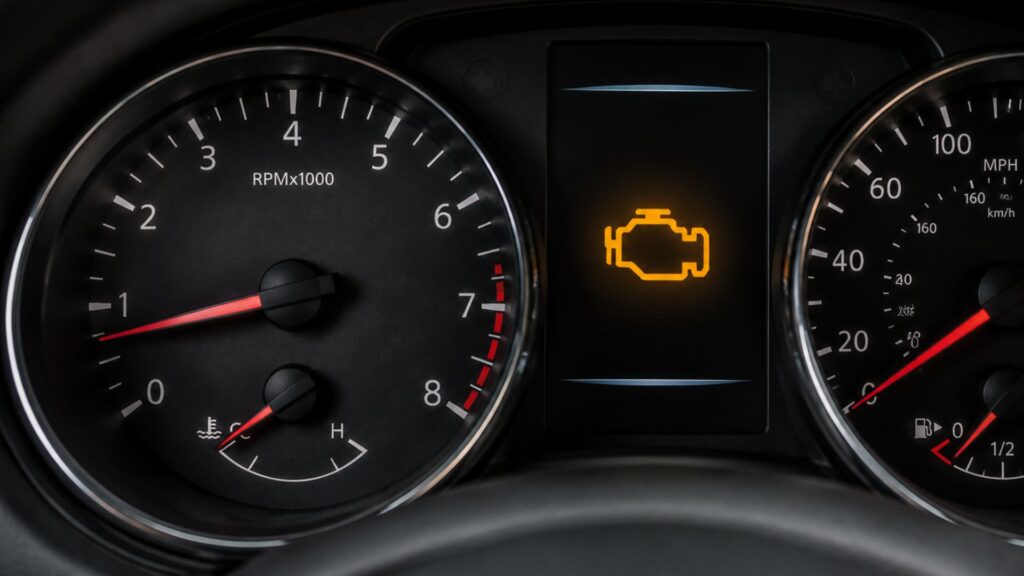
Can a Check Engine Light Come On for No Reason? Here’s What It Really Means
That little amber glow on your dashboard can feel like a punch to the gut, especially when your car seems to be running just fine. You start wondering if it means something serious, something expensive, or maybe nothing at all.
The truth is, a check engine light almost never comes on for no reason. There is usually a cause, even when it is not obvious.
Understanding what is actually happening under the hood can save you from unnecessary stress and help you avoid bigger problems down the road.
What the Check Engine Light Is Actually Telling You
The check engine light is part of your vehicle’s on-board diagnostics system, commonly referred to as OBD-II. This system constantly monitors your engine, exhaust system, fuel delivery, and dozens of other components. When something falls outside normal operating parameters, the system stores a diagnostic trouble code and triggers the check engine light on your dashboard.
Here is the key thing to understand: the light does not tell you exactly what is wrong. It tells you that something has been flagged. You need a diagnostic tool to read the stored code and figure out what triggered it.
Why Some Drivers Assume the Light Means Nothing
It is easy to dismiss the check engine light when your car seems to be driving normally. The engine sounds fine, acceleration feels okay, and nothing obvious has changed. This is actually one of the most misleading situations in automotive care.
Many issues, such as a failing oxygen sensor or a small exhaust gas recirculation problem, do not immediately affect how your car drives. Left unaddressed, though, they can reduce fuel efficiency, damage the catalytic converter, or lead to a much more expensive repair later on.
Common Reasons the Check Engine Light Comes On
There is a wide range of issues that can trigger the check engine light, and most of them fall into a few familiar categories.
Loose or Faulty Gas Cap
This one surprises a lot of people. A loose or cracked gas cap can allow fuel vapors to escape from the fuel tank, which disrupts the evaporative emissions system. The on-board diagnostics system detects the pressure loss and triggers the light.
Tightening or replacing the cap often resolves the issue, though the light may take a drive cycle or two to reset.
Oxygen Sensor Problems
The oxygen sensor monitors the level of unburned oxygen in your exhaust gas. It plays a direct role in how your engine manages combustion and fuel delivery. A faulty oxygen sensor can cause your engine to run too rich or too lean, hurting fuel economy and putting unnecessary strain on the catalytic converter.
Catalytic Converter Issues
The catalytic converter helps reduce harmful pollutants from your vehicle’s exhaust. When it starts to fail, often because of a neglected oxygen sensor, engine misfire, or oil contamination, it can trigger a specific trouble code.
Replacing a catalytic converter is one of the more costly repairs, which is exactly why catching upstream issues early matters so much.
Mass Airflow Sensor Failure
The mass airflow sensor measures how much air is entering the engine. This information is critical for accurate fuel delivery and combustion. When it fails, your car may experience rough idling, poor acceleration, or reduced fuel efficiency.
Dirty airflow sensors are also common in vehicles that have gone too long without an air filter change.
Spark Plugs and Ignition Coils
Worn spark plugs or a failed ignition coil can cause misfires. Misfires can send unburned fuel into the exhaust system, which may damage the catalytic converter and increase harmful emissions.
The check engine light will often flash, rather than stay steady, during an active misfire. This is a sign that you should pull over safely and get help promptly.
EGR Valve Problems
The exhaust gas recirculation valve, or EGR valve, recirculates a portion of exhaust gas back into the engine intake to reduce emissions and improve combustion efficiency. When this valve gets clogged or fails, it can affect engine performance and emissions.
It is a commonly overlooked part that can cause a slow, gradual decline in how the vehicle runs.
Can You Drive With the Check Engine Light On?
The answer depends on whether the light is steady or flashing.
A steady check engine light generally means the issue is present but not immediately catastrophic. You can typically drive a short distance to get the vehicle inspected, but you should not ignore it for weeks.
A flashing or blinking check engine light is a different story. This usually indicates an active misfire that may be causing real-time damage to your exhaust system and catalytic converter. Driving with a flashing light puts you at risk of a more serious and more expensive repair.
When in doubt, get it checked. There is no reliable way to know the severity without reading the stored code with a proper diagnostic tool.
Should You Use a Parts Store to Read the Code?
Many people head to an auto parts store when the check engine light comes on because some stores offer free code reads. This can be a good starting point to get a general idea of the issue. However, there is an important limitation.
A code read gives you a fault code, not a full diagnosis. For example, a code pointing to the oxygen sensor might actually be caused by an exhaust leak, a wiring problem, or a weak battery or charging system issue. Chasing the code without understanding the root cause can lead to replacing parts that do not fix the problem.
A trained auto mechanic has the experience and equipment to interpret those codes correctly and identify the actual source of the problem.
What Happens If You Ignore the Check Engine Light?
Ignoring the check engine light is a gamble. In the short term, you might not notice anything wrong. Over time, though, you risk compounding damage.
For example, a failing spark plug can lead to a misfiring engine. A misfire can damage the catalytic converter. A damaged catalytic converter can then cause failed emissions tests and costly repairs.
Your vehicle’s fuel efficiency, oil condition, and emissions output are all interconnected. When the on-board diagnostics system is trying to tell you something, it is worth listening.
How a Professional Diagnosis Actually Works
When you bring your vehicle to a shop like Newnum and Sons Garage in Covington, IN, the process starts with a proper diagnostic scan, not just a code read. The technician reads the stored codes, reviews freeze frame data from when the fault occurred, and then performs a hands-on inspection of the suspected components.
This might include checking the exhaust system for leaks, testing the oxygen sensor’s live readings, inspecting the fuel tank and evaporative system, or verifying the condition of the spark plugs and ignition coils. Every step is about confirming the actual root cause before recommending any repair.
Before anything is done, you get a clear, upfront estimate, so there are no surprises.
What to Do When Your Check Engine Light Comes On
The check engine light is your vehicle’s way of asking for attention. It does not always mean you need to panic, but it does mean you should take prompt action.
Whether it is a loose gas cap or a failing catalytic converter, there is usually a reason behind that amber glow. If your check engine light has come on and you are not sure what to do next, schedule a diagnostic appointment with the team at Newnum and Sons Garage.
Their engine repair expertise and honest approach mean you will leave with real answers, not just a reset light. Call 765-793-3334 to get started.