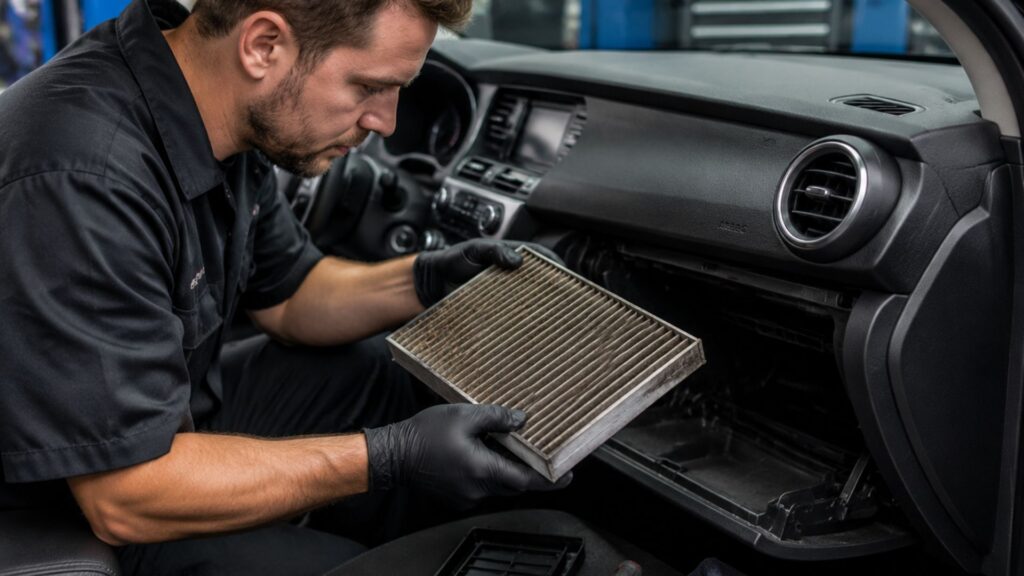
Dirty Cabin Air Filter Symptoms: 7 Signs You Shouldn't Ignore
Most drivers never think twice about their cabin air filter. It’s tucked away out of sight, doing its job quietly in the background – until it stops doing its job. When that happens, your car starts sending signals that something is off.
The problem is, those signals are easy to dismiss. A little smell here, some weak airflow there. It does not seem like a big deal until your allergies are flaring up on every commute and your windshield keeps fogging no matter what you do.
This article breaks down the seven most common dirty cabin air filter symptoms so you know what to watch for before the problem gets worse.
What Does a Cabin Air Filter Actually Do?
The cabin air filter is part of your vehicle’s heating, ventilation, and air conditioning system – commonly called the HVAC system. Its job is to clean the air coming into your car or truck before it reaches you and your passengers.
A good cabin air filter traps dust, pollen, allergens, and other particulate matter that would otherwise blow directly into your face. Some filters even use activated carbon layers to capture odors and pollutants from exhaust gas and air pollution outside.
Over time, the filter collects so much debris, mold, mildew, bacteria, and other contaminants that it can no longer do its job properly. That is when the symptoms start showing up.
7 Dirty Cabin Air Filter Symptoms You Should Know
Weak or Reduced Airflow From the Vents
This is one of the most noticeable dirty cabin air filter symptoms. When the filter is clogged with dust, pollen, and debris, air cannot pass through it efficiently. The result is weak airflow even when your fan is set to high.
If you are cranking the blower and barely feeling any air coming through, the filter is worth checking first. It is a simple fix that drivers often overlook.
Unusual or Musty Odors Inside the Cabin
A dirty filter is a breeding ground for mold, mildew, and bacteria. When air pushes through a contaminated filter, it picks up those odors and carries them right into your cabin.
If you notice a stale, musty, or just plain unpleasant smell whenever you turn on the heat or air conditioning, the filter is likely the culprit. The smell can intensify in humid conditions, which is common in Indiana’s warmer months.
Your Windshield Keeps Fogging Up
Fog on the inside of your windshield is frustrating and, more importantly, dangerous. Proper ventilation is what keeps interior humidity balanced. When airflow is restricted because of a clogged filter, moisture builds up inside the vehicle and clings to the glass.
If your defroster is struggling to clear the windshield even with the heat on full blast, a dirty cabin air filter may be making your HVAC system work against itself.
Increased Dust Inside Your Vehicle
You clean your dashboard, and a few days later it is dusty again. Sound familiar? A failing cabin air filter allows more particulate matter to slip through into the cabin air.
This is not just annoying – it is a health concern, especially for anyone in the vehicle who deals with allergies or respiratory sensitivities. If you notice excessive dust buildup on interior surfaces, that filter deserves a closer look.
Allergy Symptoms That Seem Worse in the Car
If you or your passengers notice that allergy symptoms kick in or worsen during a ride, your cabin air filter could be to blame. A clean filter is designed to capture pollen, allergens, and other airborne irritants before they enter your breathing space.
When the filter is too dirty to function properly, those particles pass straight through. For allergy sufferers, this can turn a short commute into a miserable experience. Replacing a worn filter can make a noticeable difference in air quality and personal comfort.
Unusual Noises From the HVAC System
A clogged filter forces your blower motor to work harder than it should. This added strain can produce whistling, rattling, or other unusual noises when the system is running.
If you hear sounds coming from your vents that were not there before, it is worth considering whether restricted airflow is causing the blower to overwork. Ignoring it long enough can lead to motor wear that goes beyond a simple filter replacement.
Temperature Control That Feels Off
When airflow is compromised, your vehicle’s ability to reach and maintain the desired temperature suffers. You might notice that the cabin takes much longer to warm up in winter or cool down in summer, even with the system set correctly.
Efficiency drops when the HVAC system is fighting a blocked filter. What used to feel like a two-minute warm-up might now take ten. That is your system telling you it needs help.
How Often Should You Replace a Cabin Air Filter?
Most manufacturers recommend replacing the cabin air filter every 15,000 to 25,000 miles, though driving conditions play a big role. Vehicles that log miles on dusty rural roads or in areas with high pollen and air pollution may need more frequent changes.
Brands like Toyota, Nissan, and Ford each publish their own maintenance intervals for cabin filters, and following those recommendations is a smart starting point. That said, if you are noticing any of the symptoms above, do not wait for the mileage milestone. Inspect it now.
A good rule of thumb is to check the filter during routine oil changes or tune-ups. It takes only a moment to pull and inspect, and early replacement is always cheaper than dealing with the downstream problems a dirty filter can cause.
What Happens If You Keep Ignoring It?
Putting off a cabin air filter replacement might seem harmless, but the consequences add up.
Reduced HVAC efficiency means the system works harder and wears out faster. Mold and bacteria in the filter can worsen air quality over the long term, affecting the health of everyone who rides in the vehicle.
Beyond comfort, visibility issues caused by persistent fog on the windshield create real safety risks. The filter is an inexpensive maintenance item that has an outsized impact on how your vehicle feels to drive every single day.
Cabin Air Filter vs. Engine Air Filter: Do Not Confuse the Two
These are two different components serving two different purposes. The engine air filter protects the engine from debris and is part of the engine’s intake system. The cabin air filter protects you and your passengers from the air coming through the HVAC system.
Both need to be replaced on a schedule, but they are separate parts with separate service intervals. Replacing one does not mean you have taken care of the other.
Frequently Asked Questions
Can a dirty cabin air filter affect my health?
Yes. A clogged filter can allow allergens, dust, mold spores, bacteria, and pollutants to circulate through your cabin. For people with allergies, asthma, or other respiratory conditions, this is a real health concern.
How do I know if my cabin air filter is dirty without taking it out?
Start with the symptoms. Weak airflow, musty odors, foggy windows, and increased dust are all signs worth taking seriously. If you notice two or more of these at the same time, it is a good indicator that the filter needs attention.
Is replacing a cabin air filter something I can do myself?
On many vehicles, yes. The filter is often accessible behind the glove box or under the dashboard. However, location and difficulty vary by make and model. If you are unsure, a trained technician can handle it quickly during a routine service visit.
Does a dirty cabin air filter affect fuel efficiency?
The cabin air filter does not directly impact fuel economy the way an engine air filter does.
However, if the restricted airflow causes your HVAC system to run harder and longer to reach the set temperature, it can have a minor indirect effect over time.
Signs Your Cabin Air Filter Needs Replacing
A clogged cabin air filter is a small problem that quietly grows into a bigger one. From weak airflow and musty odors to allergy flare-ups and foggy windshields, the signs are there if you know what to look for. Staying current with filter replacements is one of the simplest ways to protect your comfort, your health, and your HVAC system. If any of these symptoms sound familiar, schedule a tune-up at Newnum and Sons Garage by calling 765-793-3334 and let the team take a look.