How Often to Change Power Steering Fluid
Most drivers think about oil changes. Some remember brake fluid. But power steering fluid? That one tends to slip through the cracks until something starts making noise – or worse, stops working altogether.
Here is the hard truth: neglecting your power steering fluid is one of the quietest ways to set yourself up for a very expensive repair. The pump does not fail overnight. It wears down slowly, and old contaminated fluid is usually what speeds up that process.
If you have been wondering how often to change power steering fluid, this article is going to answer that clearly and give you real reasons to actually follow through with it.
What Power Steering Fluid Actually Does
Before jumping into timelines, it helps to understand what this fluid is responsible for. Power steering fluid is the hydraulic medium that allows your steering system to work with minimal effort on your part. When you turn the wheel, that fluid transfers force through the system so you are not fighting resistance with every turn.
It also lubricates the internal components of the power steering pump and protects seals throughout the system. Without it functioning properly, those parts wear against each other. Friction builds. Damage follows.
How Often to Change Power Steering Fluid
The general guidance from most manufacturers lands somewhere between every 30,000 to 50,000 miles, though some vehicles go longer. A few manufacturers do not even specify a change interval, which leads a lot of drivers to assume it never needs to be done. That assumption gets expensive.
The real answer depends on a few variables:
- Your vehicle’s make, model, and year
- How old the current fluid is and what condition it is in
- Whether you have noticed any steering feel changes
- Your typical driving patterns (stop-and-go puts more strain on the system)
When in doubt, pull out your owner’s manual and look at the maintenance schedule. If you cannot find a clear answer there, a quick inspection of the fluid itself tells a lot. Fresh fluid is typically clear or light amber. Dark, murky, or foamy fluid is a red flag.
What Happens When You Wait Too Long
This is where it gets serious. Old power steering fluid breaks down over time. It loses its lubricating properties, becomes contaminated with metal particles, and starts holding moisture. Each of those problems creates its own chain reaction inside your steering system.
The Pump Takes the Worst of It
The power steering pump is a precision component. It moves fluid under pressure and relies on clean fluid to stay lubricated. When the fluid gets dirty or degraded, it becomes abrasive. Metal shavings from internal wear mix into the fluid, and now you have a circulating grinding compound running through your system.
Once the pump starts to go, you will feel it. The steering wheel gets stiff, especially at low speeds. You might hear a whining or groaning sound when you turn. These are not subtle symptoms – they are the pump telling you it is already in trouble.
Seals and Hoses Deteriorate Faster
Degraded fluid is harder on seals and rubber hoses throughout the system. It can cause seals to dry out, shrink, and crack. When that happens, you get leaks. A slow leak can go unnoticed for a while, but eventually your fluid level drops low enough that the pump runs dry. Running a power steering pump without sufficient fluid, even briefly, can destroy it.
Steering Rack Damage Comes Next
If the pump is compromised and fluid quality is poor, the steering rack is the next component at risk. The rack is a more expensive and more labor-intensive repair than the pump alone. By that point, you may have already put off a simple fluid change multiple times, turning it into a much more expensive repair.
Signs Your Power Steering Fluid Needs Attention Now
You do not always have to wait for a scheduled interval. Your vehicle will often give you signals that something is off with the steering system before a major failure occurs.
Pay attention if you notice any of the following:
- Stiff or heavy steering, particularly when turning at slow speeds or parking
- A whining, squealing, or groaning sound when you move the wheel
- The steering wheel feels sluggish or slow to respond
- You spot a reddish or brownish oily puddle under the front of your vehicle
- The fluid reservoir looks low or the fluid appears very dark
Any one of these warrants a closer look. Multiple symptoms at once mean you should not delay getting it checked.
Checking Your Power Steering Fluid at Home
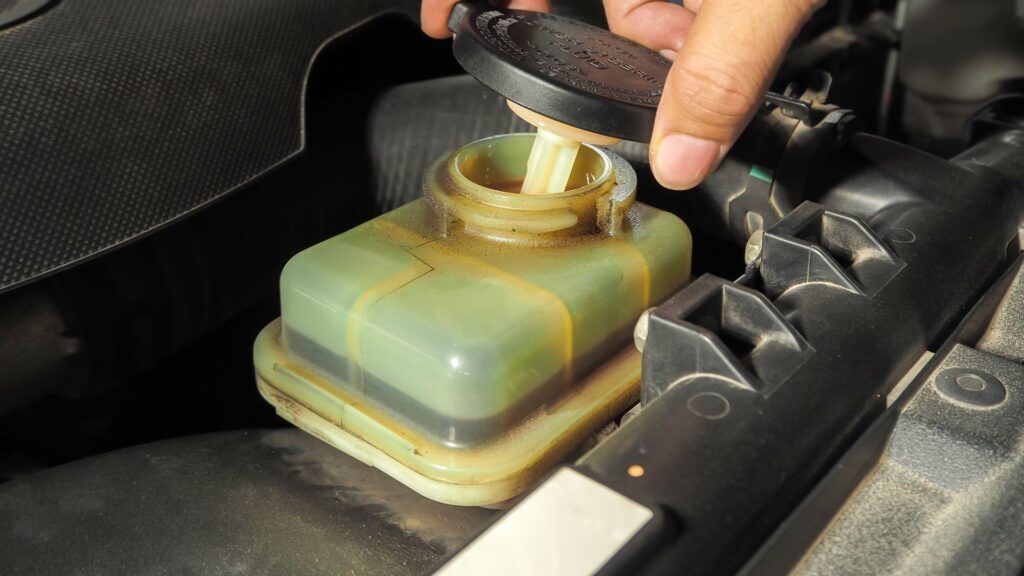
You can do a basic fluid check yourself without any tools. The power steering reservoir is typically a small, translucent plastic container under the hood with a cap marked with a steering wheel symbol. Check the fluid level against the MIN and MAX lines on the side of the reservoir.
While you are looking at the level, also look at the color. If it is dark brown, black, or murky rather than clear or lightly tinted, that fluid has been in there too long. A burnt smell or a strange texture when you rub a small drop between your fingers can also indicate degraded fluid.
Checking the fluid is free and takes about two minutes. What it reveals could save you hundreds or even thousands of dollars down the line.
Why a Fluid Flush Is Different From a Top-Off
A lot of people make the mistake of simply topping off low power steering fluid instead of flushing and replacing it. Adding fresh fluid to old, contaminated fluid dilutes the problem but does not solve it.
A proper fluid flush removes the degraded fluid from the entire system – the reservoir, the lines, and the rack. Fresh fluid is then added to the correct level. This is the service that actually resets the clock and protects your components.
Topping off has its place if the fluid looks fine and you just need to bring the level up slightly. But if the fluid is dark and overdue, a top-off is not maintenance – it is just delay.
What Type of Fluid Does Your Vehicle Need
Not all power steering fluid is the same, and using the wrong type can cause real damage. Some vehicles use a standard hydraulic power steering fluid. Others require automatic transmission fluid in the power steering system. A smaller number of modern vehicles call for a vehicle-specific formulation.
This is not a place to guess or grab whatever is on the shelf. Your owner’s manual specifies the correct fluid type, and your technician will always cross-reference this before adding anything to the system. Using the wrong fluid can degrade seals and cause leaks, essentially creating a new problem while trying to solve an old one.
How Covington Drivers Can Stay Ahead of Steering Problems
Keeping up with fluid services is easier when you have a reliable shop that tracks it for you. At Newnum and Sons Garage in Covington, IN, the approach to maintenance is straightforward – no pressure, no guesswork, just honest recommendations based on what your vehicle actually needs.
The team offers free online maintenance schedules, which take the mental load off drivers who do not want to track every service interval themselves. When your power steering fluid is due, you will know about it before it becomes a problem.
Every estimate is explained upfront before any work is done. You will know what is being done, why it matters, and what it costs before anyone touches your vehicle. That kind of transparency is what keeps drivers coming back.
If you want to stay ahead of suspension and steering problems, the suspension services at Newnum and Sons Garage cover the full picture – from alignment to steering components to the fluid systems that keep everything moving correctly.
Frequently Asked Questions
Can I drive with low power steering fluid?
You can, but you should not drive far or for long. Low fluid means the pump is not getting proper lubrication or hydraulic pressure. Short trips to a shop are one thing. Continuing to drive regularly with low fluid risks burning out the pump quickly.
Is it normal for power steering fluid to get low?
A slight drop in level over time is not unusual, but significant drops point to a leak somewhere in the system. If you are frequently adding fluid to keep the level up, that is a problem that needs to be diagnosed, not just topped off repeatedly.
What happens if I use the wrong power steering fluid?
Using an incompatible fluid can degrade the seals in your system, leading to leaks and potential pump failure. Always use the fluid type specified by your vehicle manufacturer or confirmed by a qualified technician.
How long does a power steering fluid flush take?
At most shops, a power steering flush is a relatively quick service – typically under an hour. It is often bundled with other routine maintenance to make the most of your time.
Does my electric power steering system need fluid changes?
Most modern vehicles with electric power steering do not use hydraulic fluid at all. The system is motor-driven rather than fluid-driven. If your vehicle has electric power steering, this service does not apply. A quick check of your owner’s manual or a conversation with your technician will confirm which type your vehicle has.
Know When to Change Your Power Steering Fluid
Power steering fluid is easy to overlook, but the cost of ignoring it is not small. A degraded fluid supply turns into pump wear, which turns into steering rack damage, which turns into a repair bill that could have been avoided. Knowing how often to change power steering fluid and actually following through with it is straightforward preventive care. If your steering has been feeling off, or you cannot remember the last time this fluid was serviced, reach out to Newnum and Sons Garage at 765-793-3334 and get it checked before the pump starts telling you in a more expensive way.