Bad Fuel Pump Symptoms: 6 Warning Signs Before Your Engine Stalls
Your car’s fuel pump is one of those parts you never think about until it stops working. And when it does stop working, it usually makes itself known in the worst possible way – stranded on the side of the road, engine dead, waiting for a tow.
The frustrating part? Most fuel pump failures don’t happen overnight. They send warning signs for weeks, sometimes months, before completely giving out. If you know what to look for, you can catch the problem early and avoid the whole roadside drama.
Here’s what your vehicle might be trying to tell you.
What Does a Fuel Pump Actually Do?
Before diving into symptoms, it helps to understand the job. Your fuel pump sits inside the gas tank and pushes fuel from the tank to the engine at a consistent pressure. The engine needs that steady supply to run properly – too little pressure and it stumbles, too much and it floods.
Most modern vehicles use an electric fuel pump, which runs every time you turn the ignition. Over time, heat, debris, and plain old wear can cause it to weaken or fail entirely.
The Most Common Bad Fuel Pump Symptoms
Your Engine Sputters at High Speeds
This is often the first symptom people notice, and it’s easy to brush off as “just one of those things.” You’re cruising down the highway, engine running fine, and then suddenly it starts stuttering or hesitating for a second before smoothing back out.
That stutter happens because the pump can’t keep up with fuel demand at higher speeds. It’s not delivering enough pressure, so the engine briefly starves for fuel. If this is happening consistently, especially at highway speeds, it’s time to take it seriously.
Hard Starting or Long Crank Times
When a healthy fuel pump kicks on, it pre-pressurizes the fuel system before the engine even starts. You might notice a faint hum from the back of the car when you turn the key to the “on” position before cranking.
If your fuel pump is weakening, that pre-pressurization doesn’t happen reliably. The result is an engine that cranks longer than it should before catching – or one that doesn’t start at all on the first try. Some drivers describe it as the engine “thinking about it” before firing.
Engine Surging or Inconsistent Power
A failing fuel pump doesn’t always deliver fuel at a consistent rate. Sometimes it pushes too little; sometimes it pushes too much. This inconsistency can cause the engine to surge – where you feel unexpected jolts of acceleration even though you haven’t touched the gas pedal.
It’s an unsettling symptom, and it’s also a safety concern. Unpredictable power delivery while merging onto a highway or navigating traffic is not something you want to ignore.
Stalling Under Load or While Idling
If your engine stalls when you’re accelerating hard, climbing a hill, or towing something, the fuel pump may not be able to keep up with the extra demand. Similarly, some failing pumps can’t maintain steady pressure at idle, causing the engine to stall at a red light or while sitting in a parking lot.
Stalling that seems random but happens more often in hot weather is a particularly telling sign. Heat puts extra stress on an already struggling pump, and warm weather in Indiana can push a borderline pump right over the edge.
Significant Drop in Fuel Efficiency
If you’re suddenly making more trips to the gas station without any obvious reason, a faulty fuel pump could be behind it. An inefficient pump can disrupt the fuel-to-air ratio the engine needs to run cleanly, causing it to burn more fuel than it should.
This symptom is subtle and easy to miss if you’re not tracking your mileage. But if you’ve noticed your tank draining faster lately alongside any of the other symptoms on this list, that’s worth paying attention to.
The Car Won’t Start at All
This is the symptom nobody wants, but it’s where a failing pump eventually ends up if the earlier signs get ignored. A completely dead fuel pump means no fuel reaches the engine, and no fuel means no start – period.
At this point, you’re looking at a tow. Which is exactly the situation you can avoid by paying attention to the earlier warning signs.
Other Things That Can Mimic a Bad Fuel Pump
It’s worth noting that some of these symptoms can also be caused by other issues – a clogged fuel filter, a failing fuel pressure regulator, dirty injectors, or even a weak battery. That’s why accurate diagnosis matters.
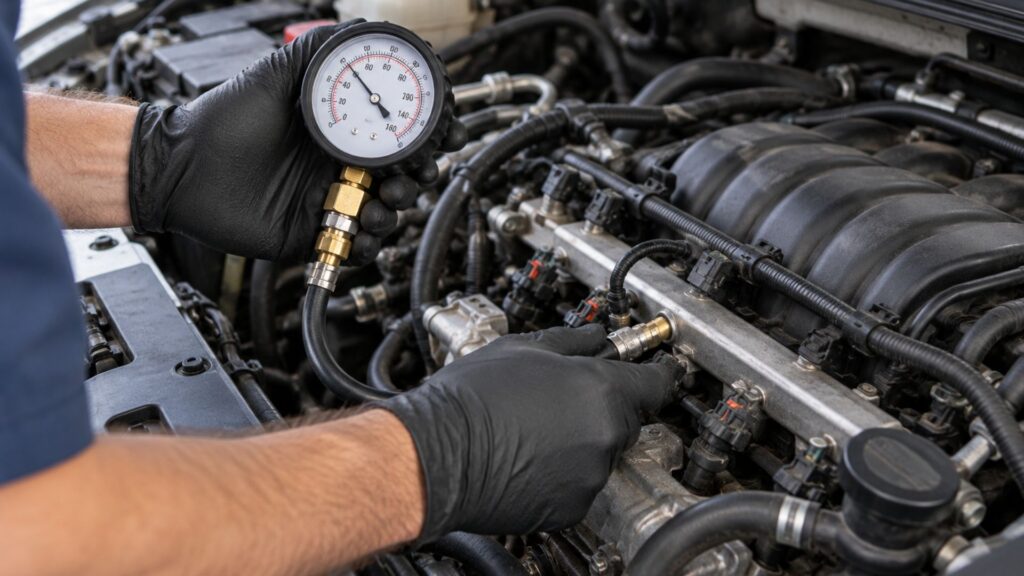
A proper diagnosis involves checking fuel pressure directly with a gauge, inspecting the filter, and testing the pump’s electrical circuit. Guessing and replacing parts without testing first wastes money and doesn’t always fix the problem.
How Long Does a Fuel Pump Last?
Most fuel pumps are designed to last around 100,000 miles, though that number can vary based on the vehicle, how the car is driven, and fuel quality. Running your tank near empty frequently is one habit that shortens pump life – the fuel itself helps cool and lubricate the pump, so low fuel levels mean more heat and more wear.
If your vehicle has accumulated significant mileage and is showing any of the symptoms above, the pump is a reasonable suspect.
What to Do If You Suspect a Bad Fuel Pump
Don’t keep driving and hope it resolves itself. A fuel pump that’s struggling won’t heal on its own, and the longer you wait, the higher the risk of getting stranded unexpectedly.
Here’s a straightforward approach:
- Pay attention to patterns. Does the sputtering happen at specific speeds? Does it start worse on hot days? Does the hard starting go away after sitting overnight? These details help a technician narrow down the cause quickly.
- Check your fuel filter first. In some vehicles, a severely clogged fuel filter can produce symptoms nearly identical to a failing pump. A filter replacement is much cheaper and worth ruling out.
- Get the fuel pressure tested. This is the diagnostic step that confirms whether the pump itself is the problem or whether something else in the fuel system is to blame.
Fuel Pump Replacement: What to Expect
Replacing a fuel pump is not a complicated repair, but it does require dropping the fuel tank on most vehicles, which means it’s a job best left to a professional. The pump itself sits inside the tank, and accessing it safely takes the right equipment and know-how.
At Newnum and Sons Garage in Covington, IN, the technicians start with a clear explanation of what’s wrong before any work begins. You get an upfront estimate so there are no surprises when the job is done. They’ll also make sure the right parts go in – not the cheapest available, but the correct ones for your specific vehicle.
Frequently Asked Questions About Bad Fuel Pump Symptoms
Can I drive with a bad fuel pump?
Technically, you might be able to drive short distances if the pump is still partially functioning. But it’s risky. A pump that’s borderline today can fail completely tomorrow, leaving you stuck wherever that happens to be. It’s not worth the gamble.
Will a bad fuel pump throw a check engine light?
Sometimes, but not always. A fuel pump failure can trigger codes related to lean fuel mixture or misfires if the engine is running poorly because of low fuel pressure. But the pump itself doesn’t always set a direct code. Don’t rely on the absence of a check engine light to assume everything is fine.
How much does fuel pump replacement cost?
Cost varies depending on the vehicle make and model, since pump prices and labor times differ widely. The best approach is to get an accurate estimate specific to your car rather than relying on ballpark numbers that may not apply.
Is it the fuel pump or the fuel filter?
Both can cause similar symptoms, which is why testing is important. A clogged fuel filter restricts fuel flow just like a weak pump does. If the filter hasn’t been replaced in a long time, that’s usually the first thing to check before assuming the pump is the problem.
What happens if I ignore the symptoms?
The symptoms get worse. What starts as occasional sputtering can progress to frequent stalling and eventually complete failure to start. At that point, you’re not just dealing with a fuel pump repair – you’re also dealing with towing costs and the inconvenience of being stranded.
Recognize Bad Fuel Pump Symptoms Before You’re Stranded
A sputtering engine, hard starts, or unexpected stalling are your vehicle’s way of asking for help. Recognizing bad fuel pump symptoms early is the difference between a manageable repair and an unplanned roadside breakdown. If something feels off with how your engine is running, don’t wait. Call Newnum and Sons Garage at 765-793-3334 to schedule a fuel system inspection and get a straight answer about what’s going on. Our engine repair services are built around honest diagnostics and quality work you can count on.