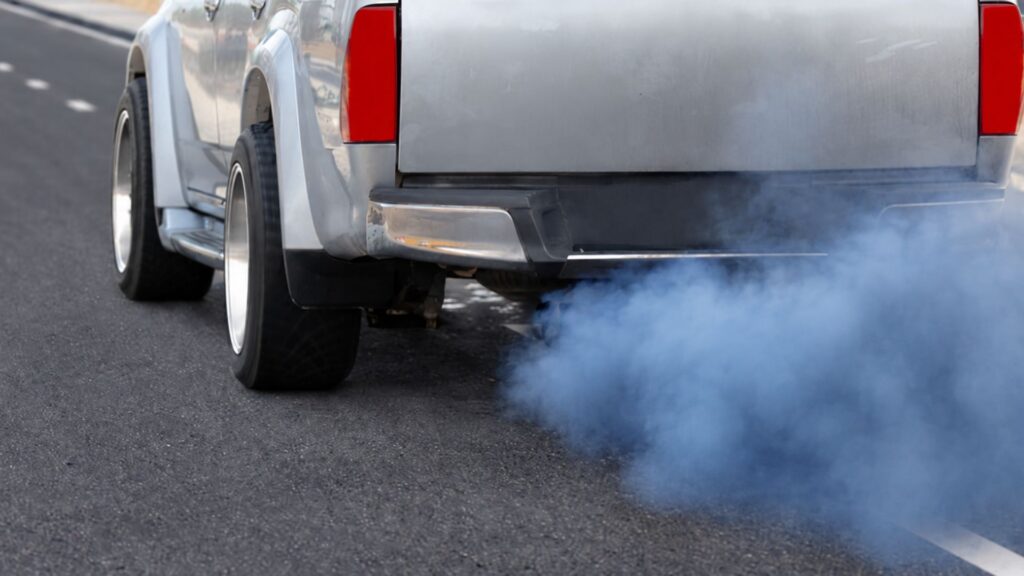
Blue Smoke From Exhaust? Here’s What It Means
You pull out of your driveway, glance in the rearview mirror, and notice a puff of blue smoke trailing behind your car. It’s easy to dismiss it as a fluke, but blue smoke from your exhaust is one of those signs your engine is quietly begging you to pay attention.
Unlike white steam on a cold morning or black smoke from a rich fuel mixture, blue smoke has one specific cause: your engine is burning oil. And that’s not something you want to ignore.
What Blue Smoke From Your Exhaust Actually Means
When oil sneaks into the combustion chamber – the area where fuel and air are mixed and ignited – it burns along with the fuel. That burned oil is what creates that distinctive blue or blue-gray smoke coming out of your tailpipe.
Your engine is designed to keep oil in the lubrication system, away from the combustion process. When the seals, rings, or valve components break down, oil finds its way where it doesn’t belong. The result is burning oil, and burning oil means blue exhaust smoke.
Is Blue Smoke Always Serious?
Not every puff of blue smoke signals an emergency, but none of it should be dismissed. A small amount of blue smoke at startup that clears up quickly can point to worn valve seals. A steady stream of blue smoke while driving, especially under acceleration, usually points to something more significant – like worn piston rings.
The key is catching it early. The longer you drive with oil burning inside the combustion chamber, the more damage builds up over time.
Common Causes of Blue Smoke From Your Exhaust
There are several reasons oil ends up where it shouldn’t. Understanding which one applies to your vehicle helps a technician zero in on the right repair faster.
Worn Piston Rings
Piston rings seal the gap between the piston and the cylinder wall. When they wear out, oil from the crankcase can slip past them and enter the combustion chamber. This is one of the most common causes of blue exhaust smoke, especially in higher-mileage vehicles.
You might notice the blue smoke is worst under heavy acceleration, because that’s when cylinder pressure changes the most, and the worn rings allow the most oil to pass through.
Damaged Valve Seals
Valve seals keep oil from leaking down into the combustion chamber through the valve guides. When they harden, crack, or simply wear out with age, oil drips into the cylinders – particularly when the engine sits overnight. That’s why blue smoke at startup that clears up after a minute or two is often a valve seal issue.
It’s more noticeable first thing in the morning because oil can accumulate while the engine sits unused.
A Clogged PCV Valve
The Positive Crankcase Ventilation (PCV) valve manages pressure inside the engine. When it gets clogged, pressure builds up in the crankcase and forces oil into places it shouldn’t go, including the intake system and combustion chamber.
This is one of the more overlooked causes of oil burning, and it’s also one of the easier ones to address if caught early.
Worn or Cracked Valve Guides
Valve guides keep the intake and exhaust valves aligned properly. When they wear down or crack, oil can work its way past them and into the combustion process. This issue tends to show up more in older or high-mileage engines that haven’t had consistent maintenance.
Overfilled Engine Oil
Here’s one that surprises people: too much oil can also cause blue smoke. If the oil level is above the recommended range, the crankshaft can whip the oil into a frothy state that more easily burns off. Always check your dipstick and keep the oil level within the marked range.
Why You Shouldn’t Keep Driving With Blue Exhaust Smoke
It might be tempting to keep topping off the oil and hope the problem sorts itself out. It won’t. Here’s what’s actually happening while you delay:
Your engine is losing oil. As it burns off, the overall oil level drops, and lower oil levels mean less lubrication for all the moving parts inside the engine. Metal starts to contact metal more directly, and wear accelerates quickly.
Fouled spark plugs are another consequence. When oil burns in the combustion chamber, it leaves deposits on the plugs, which affects ignition and engine performance. You might start noticing rough idling, misfires, or a noticeable drop in fuel economy.
Over time, continued oil burning can damage the catalytic converter as well. Oil residue coats and clogs the converter, which is an expensive component to replace on its own.
How a Technician Diagnoses Blue Exhaust Smoke
When you bring your vehicle into a shop for blue smoke from your exhaust, a good technician doesn’t just guess. They start with a thorough inspection to identify exactly where the oil is entering the combustion process.
A compression test checks the integrity of the piston rings and helps determine how much pressure the cylinders are holding. A leak-down test goes further by pressurizing each cylinder and listening for where air escapes – through the intake, exhaust, or crankcase.
Inspecting the PCV valve is usually part of the process too, since it’s a quick check that can rule out a simple cause before digging deeper. The technician will also review your oil level, oil condition, and look for any patterns in how and when the smoke appears.
All of this information together leads to an accurate diagnosis, which means the right repair the first time.
What Repairs Address Blue Smoke From Your Exhaust
The repair depends entirely on the root cause, but here are the most common fixes:
- Replacing valve seals – A targeted repair when oil is leaking past worn or cracked seals into the combustion chamber.
- Replacing piston rings – A more involved engine repair, but necessary when the rings are too worn to seal the cylinder walls properly.
- Replacing or cleaning the PCV valve – A relatively simple fix that can make a big difference if a clogged valve is the source of the problem.
- Replacing valve guides – Needed when the guides have worn to the point where oil can bypass them consistently.
- Engine repair or rebuild – In cases where multiple internal components are worn, a more comprehensive repair may be the most practical and cost-effective path forward.
The good news is that most of these repairs are entirely manageable when the problem is caught before it escalates. Waiting tends to turn a moderate repair into a much larger one.
How to Prevent Blue Exhaust Smoke in the First Place
Consistent maintenance is the best defense against oil burning. This isn’t a complicated concept, but it’s one that makes an enormous difference over the life of your engine.
Regular oil changes are the foundation. Fresh oil with the correct viscosity lubricates properly and doesn’t break down as quickly. Using the wrong oil weight or skipping changes leads to oil that degrades and fails to protect internal components the way it should.
Routine inspections give a technician the chance to catch small issues – like a stiffening PCV valve or an early-stage seal leak – before they turn into blue smoke rolling out of your tailpipe. Keeping up with your vehicle’s maintenance schedule, whether it’s printed in your owner’s manual or provided through a shop’s reminder system, is the simplest way to stay ahead of problems like this.
If your vehicle has higher mileage, it’s worth paying a little closer attention to oil consumption between changes. Some wear is inevitable, but monitoring the trend helps you address it proactively.
Frequently Asked Questions About Blue Smoke From Your Exhaust
Can I drive my car if it’s producing blue smoke?
You can drive it in the short term, but it’s not a good idea to continue doing so without getting it inspected. Oil is being consumed faster than normal, and low oil levels can cause serious engine damage quickly. Get it checked as soon as possible.
How do I know if it’s blue smoke or white smoke?
Blue smoke has a distinctly blue or blue-gray tint and often has a slight oil smell. White smoke is usually steam-like and appears in cooler temperatures or when coolant is burning. The color and smell together are your best initial clues.
Will adding more oil fix the blue smoke problem?
No. Adding oil addresses the symptom of low oil level but does nothing to fix the underlying cause. Your engine will continue burning oil until the source of the leak into the combustion chamber is repaired.
Is blue exhaust smoke covered under a warranty?
That depends entirely on your vehicle’s warranty terms and the specific cause of the problem. If you’re unsure, it’s worth reviewing your documentation or asking your service provider.
How expensive is it to fix blue exhaust smoke?
The cost varies widely depending on the cause. Replacing a PCV valve is inexpensive. Replacing valve seals is more involved. Replacing piston rings is a significant engine repair. An accurate diagnosis is the first step to understanding what you’re actually dealing with.
What to Do About Blue Smoke From Your Exhaust
Blue smoke from your exhaust is your engine’s way of telling you that oil is burning where it shouldn’t be. The faster you respond, the better your chances of keeping the repair manageable. At Newnum and Sons Garage in Covington, IN, the team is equipped to diagnose exactly what’s causing your oil burning and walk you through the repair clearly before any work begins. To get started, learn more about our engine repair services or call us at 765-793-3334 to schedule an inspection today.